
 Print
Print Word
Word PDF
PDF|
This section contains 5,068 words (approx. 17 pages at 300 words per page) |

|
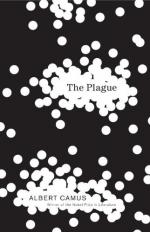
The Plague an Authentic Interpretation
Summary: The Plague, by Camus, as an allegorical representation of the metaphysical rebellion of man against Creation, projects a three-fold movement and each of them is inextricably linked up through cause and effect. The first is the absurdity of existence, the second is the apogeal absurdity ensuing profound alienation and the third is man's inexorable fight against such a predicament.
All of Camus' writings may be viewed as a quest for meaningful values in a world of spiritual aridity and emptiness. He begins with man's despair, estrangement, fear, suffering and hopelessness in a world where is neither God nor the promise that He will come- the fundamental absurdity of existence- but ultimately affirms the power of man to achieve spiritual regeneration and the measure of salvation possible in an absurd universe. This radical repudiation of despair and nihilism is closely bound up with his concept of an artist. Camus conceives of art as a way of embracing a consciousness of the absurdity of man's existential plight. But art becomes a means of negating that absurdity because the artist reconstructs the reality, endowing it with unity, endurance and perfection. By taking elements from reality that confirms the absurd existence, an artist attempts to correct the world by words and...
|
This section contains 5,068 words (approx. 17 pages at 300 words per page) |
|



