
Summary:
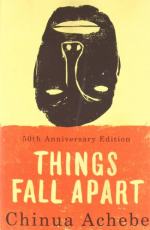
In Chinua Achebe's Things Fall Apart, the African society of Igbo is portrayed before the unwanted arrival of the Europeans and the destruction of their beloved culture by the Christian Missionaries.
In Chinua Achebe's Things Fall Apart, the African society of Igbo is portrayed before the unwanted arrival of the Europeans and the destruction of their beloved culture by the Christian Missionaries. Achebe illustrates the almost insignificant role of women in Igbo. He demonstrates to the reader that a male is to be violent and strong and a female is considered weak. In Igbo society, all that is good is considered masculine and all that is bad is thought of as feminine. Three significant instances portray this habitual idea or theme that women are regularly presented as wives and mothers, busy with the work of the household as men took on the more significant responsibilities of politics and running the community.
Achebe initially illustrates the men in Igbo society as very violent and demeaning towards women. They use women for personal pleasures and care very little about them. These women are merely a piece of property owned by their men. It is obvious the female characters in Things Fall Apart, were exploited and abused. The novel describes two instances when Okonkwo beats his wives. In Igbo, wife beating was not punished. He "was provoked to justifiable anger" after Ojiugo, his youngest wife, did not have his meal prepared because she was plaiting her hair at a friend's home (29). He beat her severely even though it was the sacred Week of Peace. It was "unheard of" to beat or show anger towards anyone during this sacred week (30). The anger that provoked him to do such an unheard of act where he did not even fear the sacred goddess or any repercussions. His other two wives tried to stop him from beating Ojiugo only because of the special Week, they took no emotion towards her beating. The women, in fear, stay out of Okonkwo's way and allow him to physically abuse his wives as if it were a normal part of a husbands' relationship. This proves they accepted their place as second-class citizens to their man. They also accepted that they were to be at Okonkwo's disposal to him and if not they were to be beaten. This would never be tolerated in many other places. Even after we was reprimanded for having no respect for the gods and goddesses he did not admit any fault to his neighbors or even to his wife (31). More shockingly, the priest of the earth goddess, Ezeani, believed Okonkwo's wife was at fault for her beating and punished him only for beating her during the sacred weak, not for the act of violently beating her (30).
A second incident in Things Fall Apart, described how bad Okonkwo hated to feel weak or frail, or womanly. Despite these feelings, he loved his daughter Ezinma more than he loved any other of his children. He also often wished she were boy. We see that Okonkwo is at least capable of tenderness. Because he does not have the same terrible expectations of a girl as he does of his son, he can treat her with at least a little gentleness. He also worries and nurtures for her when she is sick which is usually the mother's job (76, 86). Achebe has portrayed Okonkwo so violently since this passage where we can directly see Okonkwo's fathering side even though he refuses to give the same affection to his wives. Ultimately, Ezinma receives this affection because she possesses male-like qualities unlike her sensitive brother Nwoye. Okonkwo does not view Ezinma as a woman but as a boy in a girl's skin because she is brave and strong.
The last incident that was important in discussing the role of women in Things Fall Apart is very different from the previous two. It shows a more fair or reasonable view of women in the Igbo community. Odukwe fights his sister's husband, Uzowulu, over her well- being. The ceremony administrates justice. Evil Forest, the egwugwu who listens to the case ultimately demands Uzowulu to give his runaway wife and her family gifts, beg for her forgiveness and promise to never beat her again (93). Although this ceremony was dominated by men Odukwe stood up for his sister and even threatened to remove Uzowulu's genitals if he ever beat her again (92). This is a change of attitude towards women from the other important incidents. It also portrays women and having some meaning. Achebe chooses a case involving a woman's well-being, he tries to show that a woman's place in Igbo society, though vulnerable, is not always unappreciated. One can also analyze that there was some sort of justice for women and their protection.
Achebe showed reader that in the community of Igbo women were not of an important stature or class. Although, indirectly, he showed women with some important roles. Without women no cooking, cleaning, maintaining, or nurturing would exist. It would all be total violence and destruction. The women offered equally to males, although, they were not their equals. Some women such as the first wife of each husband were given respect for her position. Achebe also described a "mother" will always comfort when there are bad times (134). His depicted of the role of women is also similar to the role women played during that time in numerous places.
This is the complete article, containing 877 words
(approx. 3 pages at 300 words per page).

