
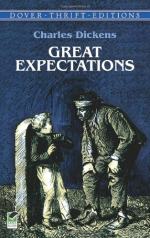
Summary:
A comparison of the opening scenes from different adaptations of the Charles Dickens novel Great Expectations. The first is the more modern version, directed by Alfonso Cuaron in 1997. The second is the older version, directed by David Lean in 1946.
Compare the openings of two versions of the film of 'Great Expectations'. Which one do you consider to be the most successful in setting up expectations.
I will compare two versions of the opening scenes from different adaptations of the Charles Dickens novel 'Great Expectations'. The first is the more modern version, directed by Alfonso Cuaron in 1997. The second is the older version, directed by David Lean in 1946.
The modern version of the film, which was first screened in 1997, is the one that I shall analyze first. The film was directed by Alfonso Cuaron who also directed the film 'Harry Potter and the Prisoner of Azkaban'. The film is in full color. The film is set in the 1970s and is staged in the American state of Florida with many of the actors being American instead of English. Many of the names have been changed into more modern sounding American names, such as 'Finn' who was originally called 'Pip' in the Dickens novel.
The first scene the viewer sees is by a body of water. There is a lot of sunlight and Finn is by himself at the river. It looks hot and airy, however clouds appear and thunder is heard immediately before the convict emerges making the set darker; this gives a huge indication that a sinister event will take place. This instantly causes the convict to appear evil and sinister, as darkness is associated with the unknown and evil. The convict first meets Finn in water. The vision of him appearing from water ads to the first impression of the convict being scary, as Florida is renowned for crocodiles living in its waters. The convict would have had to lie low in the dark setups waiting for his target. To have the convict jump out of the water where the crocodiles live would be frightening especially to a Floridian. The dialogue of the modern version is coarse and direct; and often strong profanities are used. This is effective as it puts emphasis on how violent and aggressive the convict is. There is a close up on the convict when his hands are clasped on Finn's face which adds further to the image of violence and aggression. The close up builds tension as the audience is forced to focus on the convict and what his next moves are going to be. The convict does not physically hurt Finn, instead he scares Finn into believing that he will cause harm to him if he does not do as the convict states.
The music as Finn runs away from the convict is dramatic and fast moving. This shows that Finn cannot run away fast enough as music moves faster than Finn does. This builds tension and adds to the excitement. On his way home Finn runs into his uncle, they share a joke before Finn runs home. The simplicity of adding a joke into a script is successful as shows the closeness between Finn and his uncle.
There is a narrative of an older Finn speaking about how he recalls the past events this shows that the accidental meeting with the convict is in the past and is worth remembering. This implies that the event had repercussions for the future or has affected his future in some way. Finn lives in a run down house, illustrating that he comes from a working class background. Inside the house there is a reasonable amount of light which draws attention to the immense clutter. This shows the family needs a bigger house to cater for their needs.
Throughout the opening of the modern version of the film, the main characters seem to be the convict and Finn with Finn as the protagonist. The appearance of Finn through out the opening is that he is somewhat naïve and considerate. He returned to the convict because he knew that the convict would die or be recaptured without his help but he failed to acknowledge that to be captured in the first place the convict must have committed a crime and therefore deserves to be recaptured. The convict's physical appearance is unkempt and he is dressed in his prison uniform.
The storyline has not been established in the opening scenes; there is little revealed about Mrs. Dinsmoor or her daughter -Estella and there has not been much room for storyline development. The characters introduced to this point have been established clearly and although their roles in the film have not yet been fully established, they are set up to be developed further shortly after the opening scenes. For example, there was only a brief mention of Miss Dinsmoor; her role is made clear several scenes later.
David Lean, who also directed the popular films, 'Lawrence of Arabia' and 'Brief Encounter', directed the older version of the film. It is staged in the early 19th century in Kent countryside. All of the actors are English and the names, storyline and dialect are faithful to the original Dickens novel. Lean has chosen to produce the film in black and white instead of color. The technology was available for the film to be produced in color, for example, the films 'Wizard of Oz' and 'Gone with the Wind' were created in 1939 and were in color. This is an effective technique used by Lean as it allows stronger contrast between scenes that are intended to be lighter and darker in comparison with each other as black is seen as evil and white is seen as good. This is especially effective during the opening scenes.
The first scene starts with a long shot of Pip running to the local churchyard through the marshes. The long shot makes Pip look small as the landscape looks overpowering. There is a constant wind blowing, a close up of a tree shaking and moving in the wind creating a creaking eerie sound. The leafless tree looks dark compared to the pale sky, making the tree seem dead and lifeless which reflects the image of the graveyard. Choosing to produce in black and white gives an eerie, creepy feel to beginning of the opening scene. This mirrors the image of a convict's stereotypical characteristics, subtly hinting the appearance of the convict.
There is an unsettling silence while Pip grooms his parents' graves which create huge suspense. This would develop sympathy for Pip. There is a sharp scream from Pip this has a great impact on the audience who instantly realize something has distressed him. The convict grabs Pip to prevent him from escaping. This is similar to Cuaron's version where the convict clasps his hands around Finns face.
Lean's starting is different from Cuaron's 1998 version, which starts off light and airy and changes to dark and gloomy just before the convict appears this makes the audience aware of the convict's presence before he appears, this builds expectations of the convict. Lean however, has chosen to start immediately from dark, this makes the audience more shocked once the convict appears, as no obvious change is shown to the audience to prepare them for the convict. Both directors have created a build up for a dramatic entrance by the convict; Cuaron has changed the lighting and Lean built up the atmosphere by creating a silence.
There is a close up of Pips worried face. This forces the audience to focus on how frightened the boy is. This builds further sympathy for Pip who seems an innocent, honest boy. The dialogue of the convict is direct and purposeful, there are no swear words, which is a contrast to Cuaron's adaptation. The convict puts emphasis on words that sound most violent, "tear it open." This makes the convict seem belligerent and violent. The convict then physically upturns Pip and shakes him so his pockets are emptied on the ground before dropping Pip to the floor. The convict is quite comfortable to exploit his strength to acquire what he wants. This shows the convict's violence, strength and aggression. The camera flicks between close ups of Pip and close ups of the convict this makes the audience focus of each of the pair and what their next moves will be. This same tactic is used in the modern version, this is because it is a good, effective way to build and develop the tension between the two characters. This tension has been created to help keep the audience interest in the film high, which makes them continue watching. In both films, this technique works well. There is also reference to the second convict.
The main purpose of this scene (in both films) is to introduce the characters Pip and the convict and to show the importance of their relationship at some point there will be relevance on the film of this. In both of the films Pip is seems to be a timid, naïve boy and when the films start Pip is alone. This makes the audience sympathize with Pip. Lean's 1946 version of the film focuses more on building up pity for Pip. Lean has included the long shot of Pip running across the marches and the fact that Pip was in the churchyard visiting his mother's grave also builds pity for Pip. In the modern film however, Cuaron has decided to build less compassion for Pip.
In both films, the convict is established as a vicious outcast of society. He terrifies the young boy and in Lean's version, the convict uses violence and physical strength to blackmail Pip into responding to his commands. In addition, Lean has mentioned the second convict from the original Dickens novel; the convict warns Pip that the second convict is more violent and dangerous than himself, yet another threat by the convict to enforce his violent appearance. Cuaron's version has created a very similar effect using a different technique. Cuaron uses the power of the weather and sky to impose the evilness of the convict. On his way back home in his hurry to get away from the convict Pip stumbles and falls. Again Pip looks lonely in the landscape and the audience sees his silhouette pacing across the screen. As he passes some gallows, Pip is reminded about the convict's forewarning. The effect of making the boy seem as if he cannot escape fast enough is used in both films. This reveals the boys unhappiness with his meeting with the convict. In Cuaron's version, Finn is in competition with the music to run faster, in Lean's version Pip falls and stumbles, both of these techniques conclude with the same overall effect.
On Pip's return home, he first runs into his uncle Joe before he does Mrs. Joe. His uncle helps him hide from his aunt. Joe is timid and does what he is commanded by his wife; he sympathizes with Pip and looks out for him. This implies there is closeness and understanding that Joe and Pip share despite their age or generation. Mrs. Joe whips Pip and shouts to her husband and nephew with a clash of her whip; "get to the table, both of you!" She has a large amount of control over her husband and he seems to be in her pocket. They both know what will happen to Pip and attempt to prevent it however; Joe does no try to intervene in his wife beating Pip.
Another contrast between the two pieces is that Pip does not encounter with his uncle before he arrives home as Finn does in Cuaron's adaptation. Cuaron uses Finn's uncle, Joe to give a light-hearted edge to the meeting with the convict as well as to show closeness between them.
At the dinner table Pip is very isolated and small in comparison to the adults. Joe takes Pip to see recapture of the convicts. There is a long shot of the silhouettes of the soldiers, there is only one outline of the soldiers this gives the impression they are united and together. There is a fast moving orchestral march playing loudly, this imitates the soldiers fast moving marching pace.
The camera shows a long shot followed by a close up of the convict stopping the second convict from escaping. The soldiers catch up with the pair and arrest them. Pip desperately signals to the convict that he did not betray him; the convict acknowledges his loyalty and confesses to having burgled the file food and drink therefore getting the young boy out of a nasty predicament. Joe does not mind the pie being taken, showing further that Joe is a kind and benevolent man. The music is low, harsh and condemning when the convict is on the boat looking at Pip. There has been a bond created between them.
More of the storyline is developed during Lean's version of the film the Cuaron's. Lean uses many more techniques which add to stronger effect on the audience. The audience learns more about Joe's and much more about Mrs. Joe's characteristics and they begin to feel stronger towards Pip, than Finn in the modern version. The audience finds that Lean's convict is more violent and aggressive than Cuaron's; this builds tension for the viewers when Pip is returning to the convict.
I consider the older version the most successful in setting up expectations for the remainder of the film. This is because Lean used many more techniques to create much stronger effects. For example, when the convict abuses his strength to upturned Pip. This creates the audience to develop a stronger feeling towards Pip and the convict. Also Lean has remained faithful the novel with the storyline fitting together perfectly for the next section of the film. The convict seems to leave with a better relationship with Pip so the audience expects to see him return but this feeling is not confirmed. Although there was no mention of Miss Havisham, the audience is prepared for new characters to be added once the convicts are recaptured, this would build excitement as the first characters had such strong personalities the audience would expect this on the rest of the characters. Most of the overall effects are similar in both films, however the major reason I consider the older version more successful in setting expectations is that there is a stronger reason for the convict to return and change Pip's fate. In the modern version there is not enough explanatory into why the convict has so much hatred towards the status system. As a key character has been removed, the storyline does not have as much room for development for this reason I consider the adaptation to be quite poor. The expectations for Lean's version are higher because more techniques have been used to a higher effect and the storyline flows better as the second convict is the justification to the events in the future without them the storyline is incomplete.
This is the complete article, containing 2,473 words
(approx. 8 pages at 300 words per page).

