
Summary:
In "Lord of the Rings: The Two Towers," J.R.R. Tolkien reinvents some of the scenes from William Shakespeare's classic literature. Tokien uses vivid imagery, symbolism, and lessons from real-life history to tell the story.
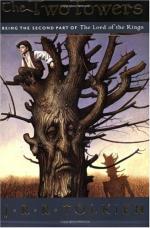
William Shakespeare, thought of to be the most genius writer of all time, created a story where soldiers, dressed as trees, would come down a hill and attack a castle. Who knew that years later, 1954 to be exact, his plot would be recreated and real trees take one final march down a hill to flood the domain of an evil wizard trying to rule Middle-earth. J.R.R. Tolkien brings Shakespeare's famous Macbeth scene to life in the most unbelievably amazing fantasies ever to be written. The famous scene from Macbeth is when Birnam Wood comes to Dunsinane Hill figuratively speaking. Tolkien takes this idea and creates one of the greatest scenes in literary history when the Ents of Fangorn Forest partake in one final march down to Isengard to destroy it and flood the evil wizard Saruman's fortress and forever deny him the chance to rule Middle-earth. Tolkien has an indescribable ability to connect classic literature such as Shakespeare, change it, and still have it maintain originality.
Tolkien's use of symbolism is just as persistent throughout the novel. In chapter two, the Passage of the Marshes, of Book IV, we see Frodo and Sam looking in the murky water of the Dead Marshes. They obtained their name by the faces of the dead people in the water whose faces are forever lying face-up so all who pass by them will see their fate. Tolkien's brilliant idea for such a morbid yet understanding scene comes from his own personal experiences.
Tolkien fought in World War One and as he passed from one trench to another in the French battlefields, he saw faces; dead faces of his fellow British comrades and thought that could be him. He very well could be looking at his fate. Frodo himself saw his own possible fate in the faces of the dead in the water. Tolkien's ability to use real life experience to convey a message is outstanding.
Perhaps one of the greatest feats that Tolkien performed in the novel was his ability to create a culture based on the names of his characters. The culture of Rohan, Home of the Horselords, is based on the character from Rohan. Éomer, Éowyn, Théoden, and Théodred, all have meaning in their individual names and Tolkien did excessive research to create these names and ultimately create their culture. The prefix Eo- in Elvish means horse. Using his language as a basis for the names of another culture, Éomer means "horse strength." Éowyn means "horse joy." Théodred means "son of horses" and Théoden means "horse king." Tolkien, through the names of his character displays an enormous talent for creating not only a language but a culture.
If one looks closely, they will not only see connections to other works of literature but personal connections and amazing symbolism that cannot be found in other novels. Tolkien is the first of his age to create another world, pulling the reader in and convincing them that they are in Middle-earth. Tolkien created characteristics and scenes from his experiences and his readings. The Two Towers without a doubt is the greatest literary work of all time because of Tolkien's amazing ability to bring to life an entire culture, language, and series of fantasy events.
This is the complete article, containing 537 words
(approx. 2 pages at 300 words per page).

