
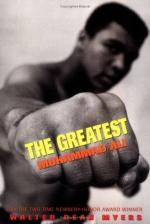
Summary:
Muhammed Ali, arguably the world's greatest boxer of all time, has had many achievements in his boxing career such as an Olympic medal and Amateur to Heavyweight championship titles. Today he is renowned as a sporting legend and a man with something always to say.
Muhammed Ali, clearly stated as the world's greatest boxer of all time has had many achievements in his boxing career, such as an Olympic medal and Amateur to Heavyweight championship titles. He brutally thumped many boxers in his boxing era with his speedy footwork and strength. Ali liked to express himself a lot and was considered by many self-righteous. He was very much into politics and very outspoken. Before his bouts, Ali would boost about how he would demolish his opponent with ease.
On January 17, 1942 - at about six thirty p.m, one of the most electrifying sporting legends to be, was born in Louisville, Kentucky. Odessa Clay and Cassius Marcellus Clay had produced a son weighing 3000grams that would one day become the heavyweight champion and one of the most controversial figures in the world. Named Cassius Marcellus Clay Junior, his mother used to tell people that his first K.O punch was aimed at her face. At six months old he punched his mum so hard that two of her teeth had to be pulled out. Cassius was raised in West End Louisville, a black area, with his younger brother Rudolph later known as Rahaman. Their father's occupation was painting religious and commercial plates while their mother cleaned and cooked in white upper-class families for a living. The Clays might have not been wealthy but Cassius and his brother always had something to eat and wear.
At the age of 12, Cassius got into boxing unexpectedly. His new Schwinn bike had been stolen and thus he met police officer Joe Martin who had a boxing gym. Cassius was full of rage as he told Martin he would whip the thief if he found him. Martin then offered to teach Cassius to box. He agreed and became a regular at Martins gym.
Some of the features he had in his first years of boxing would stay with him for his whole career. Many of the audience watching him live or via TV on Tomorrow's Champions, a show produced by Martin and broadcasted on a local station, disliked him because of the way he bragged how strong he was and that no one could beat him. Cassius's boxing style was very unorthodox but successful. He was faster than most of his opponents so he would use his hands not as a guard but held them at waist height while avoiding the punches of his opponent just with his reflexes and footwork.
By 1960 he had won all the amateur titles available and qualified for the Olympic trials. In the final of the Olympic trials, Cassius was knocked down in the first round by black army champion named Allen Hudson, but recovered to win in the 3rd round by technical knockout. This meant he qualified to travel to Rome with the US Olympic team in 1960. He started his Olympic campaign off with wins over the Belgian, Russian and Australian participant which saw him move into to the final against the Pole Zbiginiew Piertrzkowski, a veteran with a fight record of over two hundred fights. Clay won the bout and received the Olympic gold medal.
Some well-known trainers offered to train Clay who was keen on turning Heavyweight pro.
Before considering a new coach, he signed a contract with eleven millionaires from Louisville which guaranteed him $10,000 up front and fifty percent of his future income. The group of millionaires set up Clay's first professional bout against Tunney Huntsinger. Clay won it on points. Clay Snr then didn't except Joe Martin because of the non-convincing victory so Clay Jnr and his managers looked elsewhere for a trainer. Clay decided to attend Archie Moore's camp but this was only temporary. As Moore made him do housework and tried to change his fighting style.
Clay then hired Angelo Dundee as his new trainer. He helped Clay improve his skills which saw Clay win his next four bouts by knockout.
November 16, 1962 in Louisville, Clay's sixteenth bout saw him face the light-heavyweight champion Archie Moore, his ex-trainer. Clay demolished him and the fight was over after just four rounds as he predicted. One of Clay's abilities was to predict which round his opponent would fall. Archie Moore was the eleventh prediction he fulfilled.
In 1963, March, he failed to knockout Doug Jones which caused the record to break.
In the same year he met Drew "Bundini" Brown who he employed as motivator and court jester. Together they came up with the motto "Float like a butterfly and sting like a bee!." By the end of 1963, Clay's record stood at 19 pro wins out of 19 and only 3 were not knockouts. In 1964, Clay wanted to fight Sonny Liston for the pro Heavyweight title. He got his chance on February 25, 1964 where he defeated Sonny Liston. Liston couldn't land one solid punch on Clay because of the way he danced around him over and over again laying jabs and combinations. In the beginning of the seventh round Liston forfeited. Before the bout Sonny Liston was seven to one favourite over Clay. After the glorious victory Clay ran around the ring yelling at the journalists "Who is the greatest? Eat your words! I shook up the world!"
Many rumours before the bout suggested that Clay joined the Nation of Islam.
This was official after a week since the Liston fight; he changed his name to Muhammad Ali. In August 1964, he married Sonji Roi. On May 25, 1965 Ali had a rematch against Liston. Ali won astoundingly. 29 days after the fight and less than a year since his marriage to Sonji Roi, Ali filed for divorce which was completed on January 10, 1966. Ali's next opponent was Floyd Patterson who he thumped in twelve successive rounds. In 1966, Ali defeated five consecutive opponents: George Chuvalo in Canada, Henry Cooper and Brian London in England, Germany's champion Karl Mildenberger in Frankfurt and Cleveland Williams in Houston.
In 1964 Ali failed a mental aptitude test at a military induction centre in Florida and was classified 1-Y (not qualified). 1n early 1966 Ali all of a sudden became 1-A (qualified) because the U.S needed more soldiers to help out in Vietnam.
Ali was asked by journalists what his opinion was of Viet Cong, he replied "I ain't got no quarrel with them Viet Cong." He was referred by the media as "the draft dodger" and insisted him on serving his country as Joe Lewis did during World War 2.
Ali refused to fight in the war because of religious reasons. In autumn 1966, Ali hired Herbert Mohammed as his new manager since the contract with the Louisville Sponsoring Group expired. February 6, 1967, Ali fought against "the octopus" Ernie Terrell who was undefeated for five years and holding the WBA's version of the title that had been taken from Ali. Ali piled on heavy blows and kept asking him "What's my name Uncle Tom" because before the bout Terrell refused to call him by his new name. Ali defeated him confidently.
One and a half months later, Ali fights Zora Folley in New York, his last fight for a long time. He defeats him. On April 28, 1967, Ali was sentenced five years imprisonment along with a $10,000 fine and stripped of his title, his boxing license and passport. This was because he refused the obligatory step into the army.
In August, 1967, Ali married his second wife, 17-year-old Muslim Belinda Boyd.
Since Ali was unable to box he decided to take up giving lectures at colleges and universities to explain his point of view regarding war or segregation of blacks to the students. During the Clay versus U.S trial was still running, the defendant was sentenced 10 days imprisonment for driving without a valid license. Three and a half years later, Ali's management granted him a boxing license even though the U.S supreme court had not judged yet whether he was guilty or not. In 1970 Ali fought his first fight back from exile against Jerry Quarry. He defeated him in the third round by the referee ending it when Quarry had a huge cut above his eye that was bleeding heavily. Ali's next bout was against Argentinean boxer Oscar Bonavena. The fight started off ordinary but ended with Ali winning by knock out. Finally Ali went on to face Joe Frazier in the championship bout. Ali lost the bout in a 15 round blockbuster. This was his first defeat since turning professional. Both boxers suffered a heap of damage as they had to be X-rayed. On June 28, 1971, his conviction of refusing to be inducted into the army was overturned and he got his passport and boxing license back.
The next 18 months, Ali won 10 consecutive bouts. Ali didn't get more than $500,000 for any of these bouts. Ali's next opponent was Ken Norton who he underestimated and didn't bother to take seriously. He broke his jaw during the fight and lost on points. On September 10, 1973 in Los Angeles the rematch between Ali and Norton took place. This time Ali won the close battle on points in the last round. In 1974 Ali versed his close rival Joe Frazier. Ali defeated Frazier.
Ali's next fight was to be held in Zaire, Central Africa against the Heavyweight champion George Foreman. This fight was titled as "The Rumble in the Jungle."
Zaire's dictator Mobutu provided for five million dollars for each fighter.
There was some much tension between the boxers. At press conferences Ali was humorous and smart opposite to Foreman. The people of Zaire were rooting for Ali as they kept yelling out "Ali, boma ye!" which meant "Ali, kill him!"
On October 30, a crowd of 60,000 Africans cheered on Ali, screaming "Ali, boma ye!", once again. Ali's tactics were not to dodge and attack his opponent but to tire him out by letting him pile drive him against the ropes while protecting himself at the same time. Ali would then throw quick combinations and would get closer and closer to a knockout. This tactic was called the rope-a-dope. In the eighth round, Foreman was exhausted and Ali knew he wouldn't last any longer. Ali put all his remaining strength and provided the finishing touches to be the first man to knockout George Foreman. He was also the second boxer to retain the title for a second time.
Ali's next main bout was against Joe Frazier. The fight was known as "The Thrilla in Manilla." Held on October 1, 1975 in Manila, the Philippines. A crowd of 25,00 showed up. Ali won the match and deserved to as he dominated throughout it. Frazier's trainer was forced to throw in the towel as Frazier's left eye was completely shut and he could barely see anything. Ali had an affair with Veronica Porche since the Foreman-bout and led Belinda filing for divorce in 1976. One year later, Ali married Veronica.
February 15, 1978, Las Vegas, Ali lost his title for the first and only time to an unknown boxer Leon Spinks. He tried to use the rope-a-dope but proved to be unsuccessful this time. Ali had a rematch with Spinks and won his title back. He became the first boxer in the history of the heavyweight division to win the title three times.
Ali announced his retirement from boxing after the fight. He then got involved with some politics by being entrusted from President Carter to promote the boycott of the Moscow Olympics. He was unsuccessful and decided to return to boxing.
Ali was to face Larry Holmes a former sparring partner of Ali who had become champion in the meantime. Ali was not physically fit but still preceded to the bout.
Holmes punished Ali bad. Ali went on to fight one last time against Trevor Berbick in the Bahamas in 1981. Ali lost on unanimous decision. That was his last fight out of 61 professional fights that last 21 years. Ali's health was a concern so he decided to attend an eight day examination, supervised by professor of neurology Stanley Fahn.
He discovered that Ali was diagnosed with mild symptoms of Parkinson's syndrome.
His marriage with Veronica fell apart and he married long-time friend Lonnie Williams in the same year. In 1990, Muhammad Ali appeared on the global stage freeing fifteen U.S hostages from Iraq during the gulf crisis. Ali was in the spotlight again this time in the 1996 Atlanta Olympic Games where he lit the cauldron.
His career stats stand at: 56 wins 5 loses and 37 KOs.
Today he is renowned as a sporting legend and a man with something always to say.
This is the complete article, containing 2,093 words
(approx. 7 pages at 300 words per page).

