
Summary:
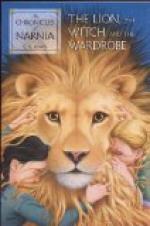
C.S. Lewis's "The Lion, the Witch and the Wardrobe" is an imaginative journey in which the characters of Lucy, Susan, Edmund and Peter learn things about others and themselves that they did not know. Lewis use imagery, personification, symbols, meanings and metaphors to pull his audience into the journey.
The novel, "The Lion, the Witch and the Wardrobe" by C.S. Lewis is a fantastic book and allows you to escape on an imaginative journey. C.S. Lewis has achieved this by using a series of language techniques such as imagery, personification, symbols, meanings and metaphors. He has also successfully pulled his audience into the journey by allowing the journey to relate to his audience using characters that undertake the journey themselves. The characters Lucy, Susan, Edmund and Peter learn things about others and even themselves that they did not know.
'An imaginative journey allows you to experience beyond the everyday'.
The novel uses a fantasy style of writing as this is captivating for even adults and allows the reader to be drawn in. The author uses this style of writing to appeal to the audience and allows us to visualise what's going on through the use of imagery. "Shafts of delicious sunlight struck down onto the forest floor, and overhead you could see a blue sky between the tree tops." Imagery is used as it allows us to really be pulled into the journey and makes strong messages for us as the reader to process.
Another technique C.S Lewis has used is personification. "The flowers screamed with delight." This technique allows us to view the story using our imaginations which can act as a metaphor to our real lives. Symbols and meanings are evident through use of characters, the White Witch being a symbol of evil and the lion as all that is good.
This novel was written so we could in fact escape on our own imaginative journey as it was published in 1952 and was written for entertainment during the war for younger children, to distract them from the horror of bombs and air raids. The author has used escapism to allow us yo escape from the everyday.
"Imaginative journeys deliver realisations and explore issues that are very real."
Throughout this novel the author has used characters to go on the journey themselves. On this journey, the characters Lucy, Susan, Edmund and Peter learn things about others and themselves that they did not know. It is a journey of mind and spirit. The important things they learn are friendship, betrayal and trust, and Edmund goes through a journey of self-discovery when he gives in to temptation. He acts greedy and selfish but learns a valuable lesson that in the end, it was his family that stood by his side. He was betrayed by the White Witch but the children forgave him and they were able to learn from this experience. We see symbols for greed and temptation throughout the novel.
This fairytale is a magical and fantastic novel, it allows us as readers to relate and participate in the journey of mind and spirit. It has used language to engage the audience and characters that not only go on an imaginary journey, but an inner journey as well which we can all relate to. The book is a creative and mystical representation of an imaginative journey and should be acknowledged by everyone.
This is the complete article, containing 513 words
(approx. 2 pages at 300 words per page).

