
Summary:
The horror genre has evolved and taken numerous forms in different cultures. This can be seen by comparing "Frankenstein" by Mary Shelley, the movie and television series "Buffy the Vampire Slayer," and "The Silence of the Lambs."
The context in which a text is produced, that is the multitude of factors 'outside' the text which significantly determine its meaning (i.e. the time, place and values of the society in which it was composed), have an important influence on the reception and representation of the genre of which that text is a part. An example of such an occurrence is the horror genre and the way in which it has varied and taken numerous forms throughout time and in different cultures.
In order to be defined as a text from the horror genre, certain characteristics are usually required, yet due to the constantly changing values of society throughout time, not to mention the divergent values of different cultures around the world, these characteristics are not only relatively broad, but open to manipulation and appropriation as a result of the different time and place, as well as the values of the society in which a text is produced.
Gothicism in literature was a phase of Romanticism, and a predecessor for mystery and science fiction. It originated in the 19th century with its chief aim being to not only evoke terror in its audience, but also to reveal the darker side of human nature.
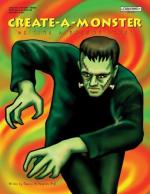
One of the most eminent texts from the Gothic horror genre is Mary Shelley's novel Frankenstein. "It was already one in the morning; the rain pattered dismally against the panes, and my candle was nearly burnt out, when, by the glimmer of the half-extinguished light, I saw the dull yellow eye of the creature open . . ." The strong imagery created effectively through the use of descriptive language in lines such as this throughout the novel creates a foreboding, ominous mood, contributing to the classification of this text as one from the horror genre.
Set in Europe in the eighteenth century, Frankenstein is the story of a young scientist, Victor Frankenstein, who discovers the secret of creation after much experimentation with human corpses and the 'new' technology of electricity. Upon successfully creating a being from dead body parts, Victor is disgusted at what he has done and runs away. "The beauty of the dream vanished, and breathless horror and disgust filled my heart." Frankenstein's monster is then cast into solitude as society shuns it because of its frighteningly grotesque appearance. With this aspect of the plot, Shelley is exploring the values of society and human nature regarding our judgemental and shallow response to those who are different, as well as, perhaps, the angst associated with the new technology of the time and it's relationship to religious values (hence the theme of 'creation').
The antagonistic character of the gothic horror genre is archetypically socially isolated and egocentric in his/her nature. Ironically, in Frankenstein both Victor and his creation fit the constructed stereotype of an antagonist. While Frankenstein's monster fits the conventional description of a 'monster', both physically and in his actions (he murders innocent characters), the audience is aware of the fact that his initial demeanour was peaceful and capable of love and affection, but sullied by his rejection from society. "I am malicious because I am miserable." The source of the monster's misery is evidently Victor, his creator's, insensitive and unsympathetic attitude towards the monster from its moment of creation.
In this sense the responder is basically given the choice as to whom they would consider a villain and are consequently forced to consider their own values regarding who or what is evil or bad in the real world, and what could possibly (if anything) justify such a judgement of character. In considering the context in which this text was created, and therefore the audience at whom it was aimed, (whose values Mary Shelley was attempting to challenge through her novel), we can see how not only these values, but the time and place in which a novel is created can effect the representation and reception of its genre.
Further proof of this can be seen by the way in which the genre has changed over time corresponding with the shifting values of society. Buffy the Vampire slayer is a Post Modern appropriation of the Gothic Horror genre set over a century later. The different representation and reception of the horror genre in this text, as opposed to Frankenstein is blatantly obvious. Buffy the Vampire slayer is a perfect example of how a text's context shapes its meaning. By alluding to the real life concerns of the society of the context in which the text is composed and set, (e.g. - divorce, feminine inequality, drugs, rape etc.) through stereotypical horror genre conventions (notably the presence of mythical creatures such as vampires and daemons), modern society is successfully appealed to.
The post modern nature of BTVS results in a much more light hearted, colourful dialogue in comparison with a traditional gothic horror text like Frankenstein. "Vampires are creeps." Quotes such as these, stated colloquially by Buffy herself, present an ironically blithe approach to the frightening issues represented through the horror genre and demonstrate the satirical nature and frivolous values of post modernism and therefore the postmodernist society in which the text is set.
The time and place in which a horror text is set is not the only contributing factor to its representation and reception as can be seen using the horror film The Silence of the Lambs, also set in America during the twentieth century, as an example. This film, directed by Thomas Harris is a hybrid of genres, including police procedural, thriller, crime, and most prominently, horror. The presence of an evil antagonist who preys on innocent characters, the foreboding mood created through non-diagetic background music, eerie lighting and suggestive camera shots and angles as well as the overall gruesomeness of the plot and graphics characterise The Silence of the Lambs as a horror genre text. The context of this text can be generalised as a time when cereal killings were of mass public concern. By alluding to real life murderers through the creation of fictional characters in his film, Harris is appealing to society's fears, therefore creating a much more effective horror film for the audience at which it is aimed and in the context in which it is set.
The different time, place and values of a text (i.e. its context) play a crucial role in shaping its meaning. While horror genre texts usually conform to a number of conventions in order to be defined as horror, these conventions are inevitably open to change as the values of society change. What might strike terror in an audience in the eighteenth century, for example, will obviously be different to today, or what may be considered horrific in China may be different to an American's idea of what is really scary. This is a result of different values resulting from the different time and place in which a text is set, which in turn have a significant influence on the representation and reception of the horror genre, as can be seen in the texts, Frankenstein, Buffy the Vampire Slayer and The Silence of the Lambs.
This is the complete article, containing 1,178 words
(approx. 4 pages at 300 words per page).

