
 Print
Print Word
Word PDF
PDF|
This section contains 526 words (approx. 2 pages at 300 words per page) |

|
"The Adventures of Huckleberry Finn" and Transcendentalism
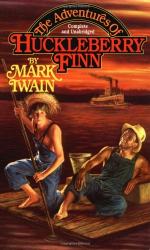
Summary: In Mark Twain's "The Adventures of Huckleberry Finn," Huckleberry Finn is portrayed as a transcendentalist, which was a broad philosophy developed by Ralph Waldo Emerson and others. Transcendentalism stresses the natural goodness of man, individuality and nature. In his story, Huck learns that morality cannot be taught, only destroyed, by society's influence.
Ralph Waldo Emerson and other New England writers of the 19th century developed the philosophy of transcendentalism, which stresses the natural goodness of man, individuality, and man's connection with nature. In his novel The Adventures of Huckleberry Finn, Twain displays Huck's character as being in agreement with Transcendentalist beliefs. Twain effectively shows that morality is natural to man and it is society that corrupts. Huck's lack of social influence frees him from the corruption of society, therefore keeping him moral and preventing him from becoming a product of his culture.
Huck has a genuine sincere sense of emotion which reflects the Transcendentalist belief of man's natural goodness. His emotion and compassion are shown when he attends the circus. .".. the horse began to rip and tear and jump and cavort around, with... the drunk man hanging on to his neck, and... the whole crowd of people standing up shouting...
|
This section contains 526 words (approx. 2 pages at 300 words per page) |
|



