
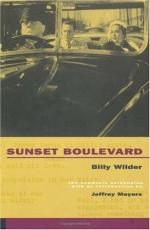
The Vanity of Celebrity Fame: "Sunset Boulevard" and Celebrity Reality Shows
Summary:
The examination of celebrity vanity in the classic film "Sunset Boulevard" and in modern-day celebrity reality shows and magazine celebrity articles.
A celebrity is not a person known for his/her talent or achievement, but an individual recognized for his/her reputation created by the media. The phase of stardom is slippery, and media may choose to represent celebrities varying from exaggerated admiration to mockery. The three texts chosen, movie "Sunset Boulevard", feature article "Over the Hilton" and television show "Celebrity Uncensored Six" are texts presenting different perception of celebrities than their usual images - either corrupted by the encircling media, overloads oneself with self-indulgence, or just mocks celebrity in a broad spectrum. Such media items empower and impresses the audience by perceiving celebrities as people who pay the price of privacy to gain well knowness, signifying the vanity of stardom from the commonly accepted images.
Sunset Boulevard is macabre movie designed for mature audiences who would be able to acknowledge the emptiness of a fallen celebrity, the vanity of stardom and insights of the movie industry. It features the transitory nature of fame, a pessimistic perception of Hollywood and the corruption of a celebrity with the example of a once legendary actress - Norma Desmond. Through the movie, audiences identifies with an alienated celebrity.
The female fatale Norma Desmond, starred by Gloria Swanson, is a distorted version of the actress herself - who had been largely absent for almost 16 years when she performed in Sunset Boulevard. Norma Desmond is the typical example of a celebrity living in the netherworld between the passed stardom and reality - "I am big, it is the pictures that got small." In the entire Sunset Boulevard, Norma is always performing as if constantly watched by fictional audiences. Her dramatic movements, superficial appearances and script-alike dialogues reveal this. This is an illustration the self-possessiveness of celebrities as a result of the illusions of fame. Besides being at the brink of madness caused by her self-denial of the passing of her fame, Norma Desmond had also become rather sexual-transgressive. Some male traits shown in Norma consist of her dominance - she demands over Max, financial independence - owns factories which constantly makes profits and her assertive nature - she fearlessly confronts her passion for Joe. The way Norma is ridiculously insane to a degree of dark humour brings sympathy, entertainment and a corrupted depiction of celebrity to audiences.
Starred by William Holden, the male protagonist, given one of the most mundane names, Joe Gillis, is a laconic character who interacts with Norma in a reciprocally dependent relationship. Without Gillis, Norma feels lifeless, loveless and powerless, she depends on him emotionally, and conversely, without Norma, Gillis is homeless, finance-less and jobless, he depends on her materialistically. Also, identical to Norma, Gillis is sexually transgressive as well. He possesses many feminine identities such as his betrayal of integrity - Joe and Norma swaps roles. He conforms to the reality where his scripts are rejected and adopt the easier role of being Norma Desmond's gigalo - weakness of character. In Gillis, audiences see a man who forfeited his personal happiness to gain money-oriented power over others - however, what he really gained is nothing, Norma nor her money can give him power. The paths in front of Gillis who cannot achieve his Hollywood dream, is merely different types of "emptiness" - let go of the Hollywood dream, or cling to the nothingness of Norma. The dark "nothingness" of Gillis underlines a meaninglessness of Hollywood, while his fainthearted and mundane nature highlights the superficiality and financial-power of Norma.
Nevertheless between Norma and Gillis's awkward relationship, there is the innocent and loving Betty Schaefer. She juxtaposes Norma personality-wise as she is understanding and sweet, yet Norma is bossy and conceited. Also, they juxtapose each other occupation-wise as they represent two different facets of the Hollywood spectrum - Norma is crazy over being in the spotlight while Betty enjoys being on the other side of the camera - "What is wrong with being on the other side of the cameras? It's really more fun." Betty stands to permeate to the audience the superficiality of Hollywood while contrasting Norma's vanity.
The relatively minor characters of the play include the chilling house butler Max, who is entirely devoted to Norma. He accepts reality however chooses to conform to Norma's insane world of delusions and even supports her - "Madame is the greatest star of them all." Max is the icon a celebrity's slave. He shapes a further warning for the public about the necessity of living reality. Also, Max is featured as a very solemn and creepy character in the film, which may suggest the gloom and danger of Hollywood. In Sunset Boulevard, there is the character Cecile De Mille - one of Norma's past directors. As time slips away and Norma becomes merely a cold product, he moves on and isolates Norma out of the movie industry. He represents the media that created transitory fame for Norma and used it to create cash for themselves, and represents the sexism existing in Hollywood as he commented on being Norma's father. Last but not least, the final characters in Sunset Boulevard worthy of mentioning are the old film stars Buster Keaton, Anna Q, Nilsson, and H. B. Warner. Such real-life stars creates a reference to reality, and places the audiences to identify with Norma, her insanity is now less criticized but more empathized.
The film noir genre of the film reinforced its cynical and pessimistic illustration of Hollywood. The black and white colors of the film evokes a particular awry and melodramatic feeling from the audiences which fits perfectly with the theme of the film - corruption and vanity. The fact that Sunset Boulevard is retold with the device of flashback narration is rather brilliant, as it highlights the fact that the past is unchangeable. When Gillis was alive, he was nothing in Hollywood, he the sinks to Norma's netherworld and was still nothing - a male gigalo, and now he is dead - he is nothing again. We hear Gillis retelling the story, and this underlines the point that life and death to him makes no difference.
The variations in the lighting of Sunset Boulevard exemplify different moods of the film. Norma is repeatedly filmed as a silhouette, which gives a feeling of eeriness as well as depicting perhaps the notion that Norma Desmond's fame is merely a silhouette, a shadow, an illusion. Max's face appeared to be seen as half black and half white few times, this lighting technique creates a sharpness of boundary - making a comparison of the lighting to the lifestyle of Max and Norma, they are living in the dark. Throughout the film, the lightings is often slowly fading away to the next scene, this highlights the notion of the passing of fame.
The angles in Sunset Boulevard positioned the audience to see Norma as an alienated character time and again filmed from a lower-angle view, with her standing on the top of a staircase. This alienation of Norma causes the audience to see celebrities as people who are isolated and unfitted. Betty is regularly shot with close ups, so audiences may see her expressions more closely and in turn to empathize with her. Gillis, however, were often shot looking down from above such as the scene he first arrived at Norma's mansion and when Norma stares at him at the staircase, this represents Gillis as pathetic and powerless.
Sunset Boulevard's scenes are generally emphasizing the superficiality of Hollywood, revealing the corruption of Norma, and highlighting the emotions character may experience. The opening scene of the film consists of a debris-flying gutter with the street sign Sunset Boulevard on it, followed by the sirening police car chase. This implies that the life of the celebrity living on the street parallel to the gutter. The protagonist Gillis first appears as a corpse facing down the swimming pool, audiences sees him from the underwater fish-eye view. As his whole body was shown, this permeation of him represent an emptiness of his life, and perhaps Hollywood. Audiences initially see Norma as a mysterious and isolated figure. She was with her pet monkey - this implies a possible future for Gillis - the monkey and him are both toys of Norma. Some memorable scenes regarding Norma in the movie include the reflection of Norma in the mirror talking to herself, which signifies that her fame is barely a delusion in the mirror - it is meaningless. The movie ends with Gillis shot by Norma back in the swimming pool, cycles back to the beginning, which implies the regular and empty pattern of fame. Norma walks toward the police camera and performs snobbishly with the scene full of her - this again implies self-indulgence.
Another aspect of the film worthy of mentioning is its intertextuality, which draws upon cultural knowledge and strengthens the alienated and corrupted celebrity represented in the film. One of the intertextual connections is the play Salome, which was linked especially with the dancing scene Norma was in and the elegant staircase inside her mansion. The other intertextual connection is the movie All About Eve, which is a similar movie concerning celebrity as Sunset Boulevard. Generally, all the intertextuality united together to achieve amplification in evoking reader's emotions about celebrities.
While Sunset Boulevard portrays the personal life of a corrupted celebrity whose fame is merely history, on the other hand, the chosen text "Over the Hilton" originated from the complementary SML magazine of Sydney Morning Herald is slightly different. The feature article is mocking of the fact that Paris Hilton is writing a "girl guide" book. The author purposely degrades Paris' intelligence and moral status, highlights the self-indulgent nature and shallowness of mind of the iconic celebrity. The interesting aspect of the feature article is its opposite representation of Paris from the other magazines, which tend to represent her more in an admirable way. The aimed audience of this feature article would be the popular culture.
The language of the feature article is cynical yet informal, it is written in such way to empathize with audience and alienate Paris by critically analyzing her. Slang such as "plebs" was used to suit the language of the popular culture. Humour was particularly employed to attract attention and to entertain there are a variation of forms it within the article - sarcasm, bathos, exaggeration and hypocrisy. Sarcasm generally highlights the vanity and superficiality of celebrity, for example "Wow, Paris - you are such a rebel", emphasizes the idea that even though Paris may seem like a rebel, but she really is not. Bathos and exaggeration presents an absurd Paris, and through this, her vanity is further underlined. Examples of bathos include - "Paris' little gems will include how, 'Never to drink Diet Coke. Diet Coke is for fat people. Only ever drink Coke or Red Bull" and example of exaggeration include - " Thinks? That's another thing I didn't known she was capable of." Hypocrisy was also employed, even though the author repeatedly emphasized on the corrupted nature of Paris, she ends the feature article with "After all, I've got another party to go to..." This hypocrisy entertains the audience as well as identifying the author for the audience - so they know she is a normal human being with emotions, and empathizing with the notion that there is nothing wrong with going to parties, however, being a celebrity, going to parties "twenty-four seven", Paris is ridiculous. Besides humour, the author also repeatedly bombards audience with rhetorical such as rhetorical questions - "Whatever will she think of next"" "Thinks"" and "Why does she even bother"" to empathize with audience, and repetition on the word "think" - implying Paris can't think. The whole speech varies in pronouns from "I use to term..." to "Let us plebs know..." this further empathizes with the audience and isolates Paris.
The visual structure of the feature article varies from photo, cartoon, to large font captions. On the left-top hand of the feature article, there is a close-up facial photo of the author, staring at the audience directly and smiling amiably. The photo is used to empathize with audience and to support the article with credibility by projecting a friendly image of the author. The title "over the hilton" is printed in large font with Hilton printed without capital letters. This is a pun saying both "over the hills" - Paris is not what she seems, and "over Hilton" - fame is moving on away from Paris. A gigantic cartoon occupying half on the page of Paris instructing juvenile children is located at the bottom of the one-page feature article. This cartoon is rather ironic, as Paris is dressed in a black mini-skirt, black high-heels shoes and wearing a party hat, looking gorgeous and sexy, ready for a party hangover. However, she is sitting on a pile of sophisticated books including the "Socrates", "Plato - Republic", and "Roget's Thesaurus", teaching fascinated primary school-ish girls. This juxtaposition brings humour and suggests a boundary between the usually partying Paris and now "teacher-wannabe" Paris, evoking audiences to consider Paris' book skeptically.
Even though the feature article "Over the Hilton" degrades Paris Hilton as a party pooper overwhelmed with self-indulgence, but it is much more objective and opinion-based. On the other hand, the third chosen text, the television show "Celebrity Uncensored Six", empowers the media by revealing evidentially the outrageous behaviors of celebrities that is commonly hidden from the camera. Audiences experience an empowering by the exposing of celebrities' personal lives and are entertained by the absurdity and expected the famous do.
In "Celebrity Uncensored Six" celebrities are separated from their images with close examinations of their personal lives. What celebrities are usually represented in the tabloids - beautiful, virtuous and dignified, Celebrity Uncensored Six opposed. The content of the show, that is, what is kept and what is omitted, base on the usually images of celebrities, and since celebrities are commonly praised and sanctified, this show choose to ridicule or degrade them. For example, it is not when Woody Harrison is performing that Celebrity Uncensored takes its shot, but when he is drunk. It is not when Tommy Lee is winning an award that he is filmed, but rather when he gets caught by the police for violence. And, it is not when Paris Hilton is sorting out finance matter at the bank that she is filmed, but rather when she is pashing her newest boyfriend named by the program - "the punk." Such content satisfies the curiosity audiences may have about the private lives of the people who the general public and media once alienated. Through the program, audience are empowered in the sense that they now have insights into higher status people's lives, and feels powerful because they can relate celebrities' lives to their own lives.
The structure of the episode begins with an introduction to load audiences with inquisitiveness about private lives of the celebrities, then focuses particularly on different events, and then, once in a while recaptures the previous events mentions, switching back and forth to the end of the show. The climax of the show is perhaps the end, where celebrities such as Little Kim are revealed nude. This messy structure of the episode brings a chaotic feeling to the show, setting it to become parallel with the nature of the celebrities in the show - their lives are unpredictable.
The most crucial atmosphere-creating element of the show is definitely the sarcastic, cynical and casual voice over. The voice over is of a male, mature, slow-paced and enthusiastic toned voice, perhaps a journalist from the paparazzi. His personnel switches from first person "we" to third person "they" (the celebrities), depending on whether he wishes to comment from the media's point of view - "we" or stating a fact - "they..." The voice creates humour by employing sarcasm and being over-dramatic. For example, when Tom Green pushed away the camera of the paparazzi very angrily, the voice over says sarcastically "we hope you have a good time..." when the camera is still following him. Drama is created when the voice over makes human sound effects whenever a celebrity does something outrageous, such as when Woody Harrison furtively walked in a non-alcohol mansion with a bottle of beer in hands - the voice over: "doo-da-doo-di-doo." The humour soothes the serious situations the celebrities are situated and as a result creates a bond with the audience. Furthermore, the voice over often uses emotive words such as "up-close" and "Justin Timberlake left heart-broken by Britney Spears..." to intensify the gossipy atmosphere. And last but not least, the voice over uses contrast to highlight the behaviors of featured celebrities, for almost every case, it introduces a celebrity by saying an aspect of him/her that the general public know very well, such as "You must know the award-winning girl Tori Spelling..." and then twist the publicly known image into something else "But here you will see the party trashing girl she is underneath."
The lighting and angle of the show is designed to amplify empathy from audience with the show. The lighting of the show is very natural and un-edited. It is exactly the opposite from the "Oscar-award" bright spotlight-ish type of lighting, as spotlight is the image the public usually sees the featured celebrities in. The lighting of Celebrities Uncensored is often dark at night or just the usual daylight, which decreases the sanctified image of celebrities. On the other hand, the angles celebrities are filmed are often filming celebrities while they are not noticing the presence of cameras, or if they have noticed, they are pushing away the camera. This filming technique supports audiences with the idea that the celebrities cannot hide their privacy away from the media even if they try.
In conclusion, all three texts "Sunset Boulevard", "Over the Hilton" and "Celebrities Uncensored Six", supports the highlighting of the vanity of stardom - how celebrities do not possess their fame - their fame belongs to the support from the media. Norma Desmond only possesses fame when the public chooses to watch her movie, Paris Hilton has no talent or intelligence - her fame only came from outrageous partying, and various other celebrities being mocked by the paparazzi. Audiences separate celebrities from the images they were initially alienated for with such representations.
This is the complete article, containing 3,032 words
(approx. 10 pages at 300 words per page).

