
Summary:
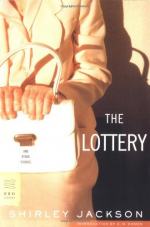
"The Lottery", a short story by Shirley Jackson and "A Tale of Two Lovers", a news article written by Barry Bearak show how different groups of people are slaves to their cultures and traditions.
Many cultures practice many types of rituals that may seem odd and extreme to one who isn't familiar with their traditions. In places such as America, we have the freedom to celebrate and practice traditions whether we want to or not. But when it comes to 3rd world countries, the people there must embrace their culture to the fullest extent or else they could be punished severely. Both "The Lottery", a short story by Shirley Jackson and "A Tale of Two Lovers", a news article written by Barry Bearak, talks of the extreme circumstances that rituals may lead to. "The Lottery" talks about a typical small town, such as the ones you would see in the movies happy, cheerful, and perfect, yet they hide a deep dark secret. They bring about a human sacrifice year after year over the simple superstition that if they do, they will have a plentiful harvest. In "A Tale of Two Lovers", a couple from the same town wed, even though they know it was completely illegal in their cultural community. It has been compared to the level of brother marrying sister. They were killed for it. Just to keep the tradition alive.
In "The Lottery", there is an annual lottery every June 27th. Every person in the town gather in the center square with their families and wait. A stool and a black box with small slips of paper inside is placed in the middle of the square, and one by one, the husband or eldest son of each family is called up to receive a slip of paper. The family who acquires the paper with the black dot must be chosen between the family. The chosen one or "winner" of the lottery is to be stoned to death. This is important to the town as the saying goes "Lottery in June, corn be heavy soon", meaning that if they have a stoning every year, they will have many, many healthy crops. This story has so many symbols, ironic happenings, and many examples of foreshadowing. For instance, Tessie Hutchinson, the winner of the lottery, was late for the drawing of the slips and started to crack jokes. Ironically, she was the one chosen to be stoned. Now she was also the one who wanted things to speed up, but when it came to her being the winner it was suddenly unfair. She was a very hypocritical sore loser. One major symbol in the story was the black box. One by one the townspeople picked up a slip from the black box. This symbolizes how each person was getting tickets to their death.
In "A Tale of Two Lovers", a man and a woman from separate families, yet the same town, got married in secret. They were completely in love with each other, yet were forbidden to get married since they were from the same town. Nirmala, the young lady, found refuge in Desh Raj's brother-in-law's house. This was their biggest mistake. They were soon discovered and before they could be tried, the village took things into their own hands, and stoned them and killed them with scythes. This wasn't as much as a ritual but as their way of punishing those who they feel have "disgraced" the town. This tradition of not marrying people of the same town doesn't make much sense to me. After all they are not blood related they just simply know each other.
Tradition is a very strong thing. It is what makes certain types of people unique and different from everyone else. The people expressed in the two pieces of literature show a typical example of those who are slaves to tradition. Some may feel that this "practice" should not be continued, but fear either being overwhelmed by those who want to keep things the way they are, or some greater force punishing that person for disturbing the flow.
This is the complete article, containing 649 words
(approx. 2 pages at 300 words per page).

