
Summary:
Brief explaination of the significance of one of the chapters.
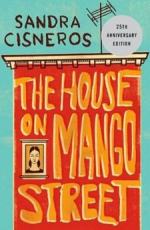
In "The House on Mango Street," Sandra Cisneros tells the tale of a youthful, Hispanic girl, named Esperanza, living in a low-class society. The story is told through a number vignettes all pertaining to a theme of some sort. For example, in the chapter "A Smart Cookie," Cisneros portrays the immense difficulties faced by those living in poverty. She cunningly uses many distinct techniques to highlight the important values of the chapter. First Cisneros writes in a tone that shows Esperanza's family is seemingly bound to their financial status for eternity. Also Esperanza's mother's striving for self-actualization shows some of the struggles the impoverished would face, and to add contrast between the lives of the rich and the poor Cisneros expresses the details of both standards of living.
When Esperanza's mother was younger she was also poor. Fear and shame overwhelmed her because she didn't have attractive cloths to wear to school and this caused her to leave it for good. By making this choice, Esperanza's mother was then prone to a life of destitution because she had made no progress from her situation. This gives Esperanza the motivation to make something more of herself but for the time being her life seems to be constantly held back by the current financial status. Esperanza doesn't have superb clothes to wear to school either and this might start the cycle her mother began all over again. Her family's current circumstances might cause them to remain that way generations to come and that is a big issue that many poor people are forced to deal with.
Also Esperanza's mother's desire to have something better in life is also a struggle face by many broke, minority families. By using repetition of the words "I could have been somebody," Cisneros implies that even people with talent or skills in everyday things don't always make it far in life. Esperanza's mother's regrets demonstrate how many poverty-stricken families came to their current situations by making the wrong choices. If maybe she had gone to school and got an education, she might not be in such a state of affairs. She is constantly dreaming of ballets and operas, which cost a lot more money, then she could afford. Esperanza's mother's only consolation would be knowing her daughter wouldn't make the same mistakes.
Finally, Cisneros shows contrast between the life that Esperanza and her family are living, and the ones that they want to live by using details from both lifestyles. This typically expresses the differences between what it would be like to be rich or poor. For example we can see that Esperanza and her family are not doing so well financially because of the objects mentioned such as subways, public libraries and oatmeal. These are characteristically material goods that a wealthier class wouldn't have to deal with. In contrast Cisneros also uses the names of objects such as plays, ballets, and operas, which are events that any needy person wouldn't be able to attend.
In conclusion, these are the reasons why Sandra Cisneros best conveys the difficulties of many lives when she wrote in the chapter "A Smart Cookie." The chapter uses all these minor details to and major descriptions to emphasize the dissimilarities between the lives of the poor and affluent. Esperanza's financial problems, Esperanza's mother's striving for self-actualization, and the contrast between two very diverse ways of life presents all the complications of living a life such as hers.
This is the complete article, containing 575 words
(approx. 2 pages at 300 words per page).

