
|
This section contains 1,028 words (approx. 4 pages at 300 words per page) |

The Tipping Point
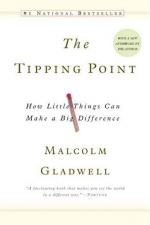
A Successful business man in the area of Dallas, Roger Horchow is a prime example of a connector. Horchow has backed popular Broadway plays such as Les Miserables and Phantom of the Opera. Horchow had scored a 98 on a list of randomly selected names from a Manhattan phonebook, the average score was not that high. What makes him know so many people? He told Gladwell, that he was not using his range of people as a business strategy, and he did not consider it a collection (43) but for him to know. Horchow has the memory to remember the little boys he played with when he young. Remembering every name, and address of the person.(44) When in the business world you meet many different people. If you are a true business man and this person you have met would help you succeed, one would remember them. I know many connectors that are in my life, but when writing this one comes into mind. Phil Marcario, or as me and my friends had come to know him, Uncle Phil. He owns a restaurant that is known by many. Uncle Phil moves around a lot, from Cutchogue, to Wading River, to Rocky Point, and now to Jamesport, and Florida. Holidays and occasions as he talks about the people he knows, I constantly ask him "How do you know so many people"" He simply answers, "People owe me a lot of favors." That could be the Italian in him speaking, but after reading the Tipping Point, I often wonder if he is a connector and has started epidemics. "Perhaps it is best to call the Connector impulse simply that- an impulse, just one of the many personality traits that distinguish one human being from another." (46)
December, 22 1984, something unthinkable happened on a subway in New York City. Bernard Goetz shot four young boys who were attempting to mug Goetz. (134) Some would say he was asking to be mugged by sitting next to the boys when the car was completely empty. But was he demonstrating something to the other subway goers? This man was considered a hero by many. He had shown people that there is a way to stop being mugged, although it was violent and illegal. Illegal and ungodly, sure, but the city's crime rate reached "epidemic proportions." (135) Murders had now seem to drop by two thirds of what they had been. A salesmen is someone who persuades and convinces other people to buy, or believe something. How is Goetz a salesmen? He sold the idea that there is a way of lower the crime in New York City. This shooting open doors for subways. "The Graffiti was symbolic of the collapse of the system." (142) Soon enough the subway companies brought in David Gunn to help with this problem. Every night the cars would be painted over covering the fresh graffiti that youths had done. No car that was dirty would be used on the tracks. A salesman makes emotional sense of an idea or an object. (200) Although I have no one in my life that would think to shoot four young boys on a subway to prove something, but I do have a mother who can prove something by going to great lengths. At a very young age my mother's mom had passed away leaving her with her father and her step mother, Dorothy. Seven years later her father passed away, now she was left with your typical
"evil" stepmother. She moved in with her older sister, and basically grew up by herself. She may not be a "salesman" to other people, but to me she showed me that you can do anything with your life even though difficult things happen. Growing up with absolutely no guidance, she became successful and happy with her life today. Stable and healthy she teaches me that not only can I do anything with my life but she will let me do it. My mother does not directly tell me this bit of information but I had learned this throughout hearing her stories. A salesman convinces the unconvinced, and teaches the uneducated. Goetz taught New York City officials about the crime in a violent matter, but both my mother and Goetz taught a person, or a while city by doing.
Connecters, Mavens, and Salesman fall into one of the three laws that were described in the book, The law of the Few. This law says that those three categories of people are the ones responsible for spreading epidemics. So if one were ever thinking of spreading a word-of-mouth epidemic, you would want them to be your prime resource. (256) Roger Horchow and Bernard Goetz two men who had spread or had the ability to spread epidemics make you think that there are many people close to you that can, to, spread social and public epidemics.
|
This section contains 1,028 words (approx. 4 pages at 300 words per page) |


