
Summary:
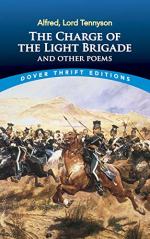
Most literature portrays soldiers at heroic, especially when they give up their lives for a cause. A different viewpoint is seen in two poems: Lord Alfred Tennyson's "The Charge of the Light Brigade" and "The Charge at Parihaka" by Jessie Mackay. Both poems question the unquestioning nature of soldiers heading into battle.
Lord Alfred Tennyson's poem, "The charge of the Light Brigade", coveys the message of idiotic heroism. The poem implies that dying for your country has a lot more to do with stupidity, rather than honour. Jessie Mackay's poem, "The charge at Parihaka" reveals that the soldiers are far from heroes, they are cowards and thieves. The poem suggests the charge made at Parihaka had a lot more to do with cowardliness, rather than heroism. Both these poems have similar structure to portray their message, since "The charge at Parihaka" is a parody of "The charge of the Light Brigade."
In "The charge of the Light Brigade", the soldiers know they are going to die but still go into the 'valley of death'. This shows that they are heroes, but foolish. We can see this when Tennyson says:
Was there a man dismayed"
Not though the soldiers knew
Someone had blundered:
Theirs not to make reply,
Theirs not to reason why,
Theirs but to do and die
The rhyming of 'reply', 'why' and 'die' foregrounds the hopelessness of their situation. An ordinary man, "someone", is responsible for the death of so many soldiers. It shows a human being has so much power to send six hundred soldiers to their graves. Tennyson does not refer to the rank to show that the individual is not that important, he is just a human being. It is impersonal to show that he has no honour. A soldier may not question his superior; therefore the soldiers make this idiotic charge. Tennyson suggests its idiotic heroism; the soldiers are noble but not the commander. The poem does not affirm the glory of dying for your country but reveals the thoughtless death sentence imposed on the soldiers.
In contrast, In "The charge of at Parihaka" the soldiers know there is no danger but still take twelve hundred men, led by a colonel. This shows that they were cowards and should not be regarded as heroes. We can see this when Mackay says:
Was there a man dismayed"
No for the soldiers knew
There was no danger!
Theirs not to reckon why,
Theirs not to bleed or die,
Theirs but to trample by
This shows that there is no fear, therefore there is no bravery. The line, "there was no danger!" is in italics to stress the idea that there is no danger which deconstructs the heroes, and shows it was not an honourable deed. Jessie Mackay shows it takes a high rank officer, colonel, to lead where there is no danger, whereas in "The charge of the Light Brigade" it takes a 'someone' to lead six hundred to their graves.
From this evidence we can clearly see that Lord Alfred Tennyson's poem, "The charge of the Light Brigade" conveys the message that was is an act of stupidity. Whereas in Jessie Mackay's poem portrays the message that the charge made at Parihaka was an act of cowardliness. We as readers learn that before we honour people we must first understand what the achieved and if it was honourable. Both poems deconstruct the political rhetoric political leaders' use when they want to entice young men to enlist in their armies to gain honour.
This is the complete article, containing 518 words
(approx. 2 pages at 300 words per page).

