
 Print
Print Word
Word PDF
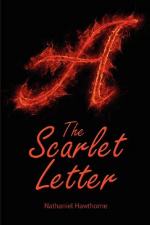
PDFThe vulgar, who, in those dreary old times, were always contributing a grotesque horror to what interested their imaginations, had a story about the scarlet letter which we might readily work up into a terrific legend. They averred that the symbol was not mere scarlet cloth, tinged in an earthly dye-pot, but was red-hot with infernal fire, and could be seen glowing all alight whenever Hester Prynne walked abroad in the night-time. And we must needs say it seared Hester’s bosom so deeply, that perhaps there was more truth in the rumour than our modern incredulity may be inclined to admit.
VI. PEARL
We have as yet hardly spoken of the infant; that little creature, whose innocent life had sprung, by the inscrutable decree of Providence, a lovely and immortal flower, out of the rank luxuriance of a guilty passion. How strange it seemed to the sad woman, as she watched the growth, and the beauty that became every day more brilliant, and the intelligence that threw its quivering sunshine over the tiny features of this child! Her Pearl—for so had Hester called her; not as a name expressive of her aspect, which had nothing of the calm, white, unimpassioned lustre that would be indicated by the comparison. But she named the infant “Pearl,” as being of great price—purchased with all she had—her mother’s only treasure! How strange, indeed! Man had marked this woman’s sin by a scarlet letter, which had such potent and disastrous efficacy that no human sympathy could reach her, save it were sinful like herself. God, as a direct consequence of the sin which man thus punished, had given her a lovely child, whose place was on that same dishonoured bosom, to connect her parent for ever with the race and descent of mortals, and to be finally a blessed soul in heaven! Yet these thoughts affected Hester Prynne less with hope than apprehension. She knew that her deed had been evil; she could have no faith, therefore, that its result would be good. Day after day she looked fearfully into the child’s expanding nature, ever dreading to detect some dark and wild peculiarity that should correspond with the guiltiness to which she owed her being.
Certainly there was no physical defect. By its perfect shape, its vigour, and its natural dexterity in the use of all its untried limbs, the infant was worthy to have been brought forth in Eden: worthy to have been left there to be the plaything of the angels after the world’s first parents were driven out. The child had a native grace which does not invariably co-exist with faultless beauty; its attire, however simple, always impressed the beholder as if it were the very garb that precisely became it best. But little Pearl was not clad in rustic weeds. Her mother, with a morbid purpose that may be better understood hereafter, had bought the richest tissues that could be procured, and allowed her imaginative faculty its full play in the arrangement





