
BookRags.com Literature Guides Literature
Guides
Criticism & Essays Criticism &
Essays
Questions & Answers Questions &
Answers
Lesson Plans Lesson
Plans
My Bibliography Periodic Table U.S. Presidents Shakespeare Sonnet Shake-Up
Research Anything:        
History | Encyclopedias | Films | News | Create a Bibliography | More... Login | Register | Help

Not What You Meant?  There are 36 definitions for Argo.

Zelazny, Roger 1937–: Critical Essay by The Times Literary Supplement

Print-Friendly  Order the PDF version  Order the RTF version
Roger Zelazny
About 1 pages (149 words)
Lord of Light Summary

Bookmark and Share Questions on this topic? Just ask!

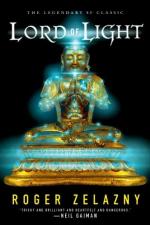
Lord of Light is a weird allegorical fantasy which sets out to demonstrate how self-destructive is the human compulsion to create gods and demons. In a mistily realized future world, heaven and earth are ruled over by Hindu gods…. It sounds, and is, far-fetched. Much of the writing is reminiscent of those awful jokes, mercifully no longer fashionable, where scato-logical content was meant to provide comic contrast with a mock biblical style. There are occasional "poetic" bits of description: "Morning's pink parasol opened above the tangled hair of the clouds …" and there is often a strong feeling that Mr. Zelazny must be parodying something—though one is never sure what.

"Other New Novels: 'Lord of Light'," in The Times Literary Supplement (© Times Newspapers Ltd. (London) 1968; reproduced from The Times Literary Supplement by permission), No. 3444, February 29, 1968, p. 213.

This is a free excerpt of 142 words. There are 149 words (approx. 1 page at 300 words per page) in the full critical essay.

Read the rest of this Criticism with our Zelazny, Roger 1937–: Critical Essay by The Times Literary Supplement Access Pass.

Ask any question on Lord of Light and get it answered FAST!
Answer questions in BookRags Q&A and earn points toward
discounted or even FREE Study Guides and other BookRags products!
Learn more about BookRags Q&A
Copyrights
Zelazny, Roger 1937–: Critical Essay by The Times Literary Supplement from Literature Criticism Series. ©2005-2006 Thomson Gale, a part of the Thomson Corporation. All rights reserved.

Join BookRagslearn moreJoin BookRags


About BookRags | Customer Service | Report an Error | Terms of Use | Privacy Policy

