
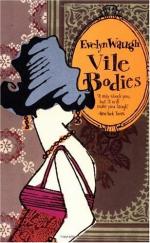
It is almost certain that Evelyn Waugh is the finest entertainer alive. It is certain that both Waugh and the kind of book he writes are supremely distasteful to many of the most serious people…. Waugh has been variously characterized as nasty, hateful, snobbish, trivial, reactionary, vindictive, fawning, immature, pompous, and rude, ascriptions which are substantially true yet somehow beside the point. The general repugnance of the contemporary intellectual for the literature of entertainment is, I think, related to his dislike of Waugh…. Our culture has to an unprecedented degree succeeded in dividing our entertainment from our elevation…. [We] are quick to mistrust any piece of writing which does not seem immediately to challenge profound assumptions or elicit the most delicate moral choices. Our less ponderous relations to literature have suffered an attrition, and it is possible that a certain kind of literature—the kind I assume Waugh to represent—is losing the capacity to express anything significant. (pp. 88-9)
[But] Waugh is essentially a comedian, and his early novels are celebrations of Mayfair, not satires of it. Nothing is more patent than that he loved … all the raffish, bored, useless, picaresque characters who fill the pages of his earliest novels. These novels, and Black Mischief, A Handful of Dust and Scoop, are successful because of the purity of their comic vision—they are elaborated spoofs. Remarking the absurdity and waste of a particular social life, they omit its real consequences. The worst fate that overtakes anyone in them (besides, of course, being bored) is being eaten by cannibals, or reading Dickens aloud to a madman—grisly consummations, but merely grisly. Although Waugh understood that the assumptions his "bright young things" lived by were preposterous, he was honest enough not to deny that, with certain qualifications, their standards were sympathetic to his own. They were thundering snobs, xenophobes, opportunists, ignoramuses, and thoroughly cultivated ladies and gentlemen. Like Waugh they were more outspoken than an American can easily imagine, and like Waugh they accepted with an abandoned equanimity their misfortune in being three hundred years too late. In his early novels Waugh was able to sustain a tone of bemused mournfulness over a society bent on smashing itself to pieces, while at the same time depicting the feckless innocence of both those who were most active in the smashing and those most hurt by it. The matrix of his comedy is this conjunction of the most abrupt and violent events with the most innocent villains.
This is a free excerpt of 410 words. There are 979 words (approx.
3 pages at 300 words per page) in the full critical essay.
Read the rest of this Criticism with our Waugh, Evelyn (Arthur St. John) 1903–1966: Critical Essay by Steven Marcus Access Pass.

