
 Print
Print Word
Word PDF
PDF|
This section contains 3,333 words (approx. 12 pages at 300 words per page) |

|
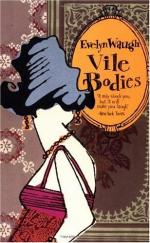
Evelyn Waugh, like Charles Ryder [the narrator of Brideshead Revisited], is an architectural painter who sees, with anger, horror, and a kind of fascination, the destruction of old homes, the decay of institutions, the death of meaningful values. But Waugh refuses to create a merely sentimental picture of the achievements of the past at the moment of extinction; he insists, rather, upon recording in scrupulous detail the actual process of demolition. In Waugh's satiric vision, seeming trivial events—the breaking up of a manor house, the redecoration of an old room with chromium plating, a drunken brawl in an Oxford courtyard—are symbols of a massive, irreversible, and terrifying victory of barbarism and the powers of darkness over civilization and light. Waugh's early novels, especially Decline and Fall (1928), Vile Bodies (1930), Black Mischief (1932), and A Handful of Dust (1934) are chronicles of that awful triumph. (p. 4)
The wholesale demolition of...
|
This section contains 3,333 words (approx. 12 pages at 300 words per page) |
|



