
 Print
Print Word
Word PDF
PDF|
This section contains 547 words (approx. 2 pages at 300 words per page) |

|
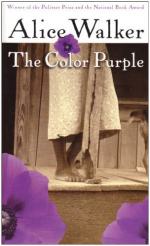
In this arresting and touching novel [The Color Purple], Alice Walker creates a woman so believable, so lovable, that Celie, the downtrodden, semi-literate, rural black woman joins a select company of fictional women whom it is impossible to forget. (p. 93)
Alice Walker is, of course, a feminist and she understands well the circumstances that force a woman into an anti-man stance. Her gallery of women are living examples of man's inhumanity to women: Sophia, wife of Harpo, Albert's eldest son, who only wanting to be herself and not the fantasy woman Harpo thinks she ought to be, changes from a warm, happy woman to a bitter paranoic who only wants to get through her life without killing anyone. Mary Alice, "Squeak," who takes Sophia's place with Harpo when the latter is jailed for sassing the mayor's wife (white), and who allows her uncle, the warden to rape her...
|
This section contains 547 words (approx. 2 pages at 300 words per page) |
|



