
BookRags.com Literature Guides Literature Guides Criticism/Essays Criticism/Essays Biographies Biographies My Bibliography Periodic Table U.S. Presidents Shakespeare Sonnet Shake-Up
Research Anything:        
History | Encyclopedias | Films | News | Create a Bibliography | More... Login | Register | Help
Not What You Meant?  There are 20 definitions for Slaughter.  Also try: Slaughterhouse or Children's Crusade or So It Goes.


Vonnegut, Kurt, Jr. 1922–: Critical Essay by Joyce Carol Oates

Print-Friendly  Order the PDF version  Order the RTF version
Kurt Vonnegut
About 1 pages (384 words)
Slaughterhouse-Five Summary

Bookmark and Share

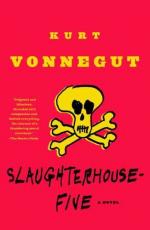
Slaughterhouse-Five or The Children's Crusade is a book that hasn't yet been written. Vonnegut is so obsessed, so horrified by his subject that he quite literally cannot approach it, can only hint at it, surrounding it with semicomic non sequiturs, a kind of toned-down Catch-22. The subject is the firebombing of Dresden. But this subject is not the content of this novel. The novel is about any number of other things, and it is also about Vonnegut's failure to write the novel, his sense of despair, his conviction that it is a lousy novel, and so forth. Rarely has the failure of a piece of fiction been so obviously tied up with the author's intense desire to write about it. Vonnegut says in his introductory chapter that he has been writing or trying to write the story of the firebombing of Dresden for years, this is his "famous" unwritten novel, and yet what he has finally turned out is a highly artificial, glib, picaresque tale of someone named "Billy Pilgrim." Billy is captured by a flying saucer from the planet Tralfamadore on his daughter's wedding night and, gifted with a peculiar talent for timelessness, he can see past, present, and future, and relive or live these various times, but without the power to alter anything. This gives Vonnegut the chance to jump maniacally back and forth and ahead in time, creating a jumble of events and non-events, since he is anxious not to write about his alleged subject, which is apparently the firebombing of Dresden. Of course, a writer writes about what he wants to write about, and it is quite possible that Vonnegut has been deluding himself for decades—what he really wants to write about is the nonsense of Billy Pilgrim, and not the seriousness of Dresden. It would have been kind of someone to tell him that he couldn't write about it anyway, since fiction is not written about events but about people: Vonnegut has not created any people here, only bizarre cut-outs mouthing lines that are sometimes funny and sometimes not. His grotesque scenes are unfelt because they are unimagined. (pp. 535-36)

Joyce Carol Oates, in The Hudson Review (copyright © 1969 by The Hudson Review, Inc.; reprinted by permission), Vol. XXII, No. 3, Autumn, 1969.

This is a free excerpt of 379 words. There are 384 words (approx. 1 page at 300 words per page) in the full critical essay.

Read the rest of this Criticism with our Vonnegut, Kurt, Jr. 1922–: Critical Essay by Joyce Carol Oates Access Pass.

Copyrights
Vonnegut, Kurt, Jr. 1922–: Critical Essay by Joyce Carol Oates from Literature Criticism Series. ©2005-2006 Thomson Gale, a part of the Thomson Corporation. All rights reserved.

Join BookRagslearn moreJoin BookRags


About BookRags | Customer Service | Report an Error | Terms of Use | Privacy Policy

