
 Print
Print Word
Word PDF
PDF|
This section contains 454 words (approx. 2 pages at 300 words per page) |

|
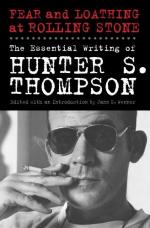
[If] you accept what Thompson is doing, [Fear and Loathing: On the Campaign Trail '72] works. That is, this heavily personalized writing-on-the-run, riddled here and there by the clear eye of hindsight, does convey an honest picture of a political writer picking his way through all the hoopla, propaganda, tedium, and exhaustion of a campaign.
For the straight political writer, survival is sought both physically and professionally throughout an election year; keeping the body functioning and the soul unsold. For the advocacy journalist such as Thompson, whose soul straightforwardly was on the barrelhead for George McGovern from the start, the odyssey is much less detached, but for that very reason more colorful and entertaining. A lot of it seems repetitious and irrelevant after a while, and more Hunter Thompson than you want at a stretch. But when was the last time you read in the establishment press that...
|
This section contains 454 words (approx. 2 pages at 300 words per page) |
|



