
 Print
Print Word
Word PDF
PDF|
This section contains 8,066 words (approx. 27 pages at 300 words per page) |

|
SOURCE: "Voice, Mind, Self: Mother-Daughter Relationships in Amy Tan's The Joy Luck Club and The Kitchen God's Wife," in Women of Color: Mother-Daughter Relationships in 20th-Century Literature, edited by Elizabeth Brown-Guillory, University of Texas Press, 1996, pp. 208-27.
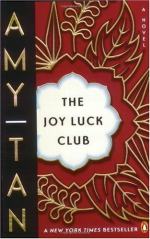
In the following essay, Booth Foster discusses the importance of daughters listening to their mothers' voices in order to discover their own voices in Tan's The Joy Luck Club.
In The Joy Luck Club and The Kitchen God's Wife, Amy Tan uses stories from her own history and myth to explore the voices of mothers and daughters of Chinese ancestry. Each woman tells a story indicative of the uniqueness of her voice. Mary Field Belensky, in Women's Ways of Knowing, argues that voice is "more than an academic shorthand for a person's point of view … it is a metaphor that can apply to many aspects of women's experience and development…. Women...
|
This section contains 8,066 words (approx. 27 pages at 300 words per page) |
|



