
 Print
Print Word
Word PDF
PDF|
This section contains 2,134 words (approx. 8 pages at 300 words per page) |

|
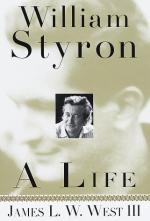
The American Muse dictates its own terms of refashioning reality, and almost always these will take a highly personal, even solipsistic turn. One prominent example of such turning is William Styron's Sophie's Choice, ostensibly an attempt by one of our major novelists to come to grips with the meaning of Auschwitz but actually, as we shall see, a much different kind of book.
Sophie's Choice is not an historical novel and, despite its fascination with Auschwitz, is at bottom not even primarily "about" the Holocaust. Its core subject is an aesthetic one, not an historical one, and as a result its essential concerns are chiefly those that belong to the Künstlerroman, or that category of novel that portrays the artist as a young man. As it happens, this particular young man's artistic and sexual drives attach him to a woman survivor of Auschwitz, but her story, while...
|
This section contains 2,134 words (approx. 8 pages at 300 words per page) |
|



