
 Print
Print Word
Word PDF
PDF|
This section contains 885 words (approx. 3 pages at 300 words per page) |

|
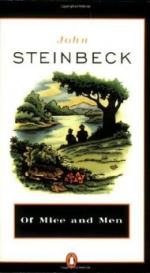
The weeds and the willows and the tall waving grain of California's sweet valleys, rabbits and mice and a woman's soft hair, the hot slanting sun and the hungry desire of a pair of floaters to own a handful of dirt are the materials out of which this lovely new novel by John Steinbeck is evoked. Purling water is purling water here, without overtones; a gracious sky is as beautiful as in any lyric poetry. The men are lads sent down to the ranch from Murray and Ready's in San Francisco: Lennie, like Nature itself, whose powerful fingers killed little animals before he knew it, and George, struggling to become human. "Of Mice and Men" is another of John Steinbeck's parables of earth, and no writer I know shapes the soil into truer patterns for us to understand.
In "Pastures of Heaven" this dream had its first fruition...
|
This section contains 885 words (approx. 3 pages at 300 words per page) |
|



