
BookRags.com Literature Guides Literature Guides Criticism/Essays Criticism/Essays Biographies Biographies My Bibliography Periodic Table U.S. Presidents Shakespeare Sonnet Shake-Up
Research Anything:        
History | Encyclopedias | Films | News | Create a Bibliography | More... Login | Register | Help


Steinbeck, John 1902–1968: Critical Essay by Alfred Kazin

Print-Friendly  Order the PDF version  Order the RTF version
About 6 pages (1,677 words)
John Steinbeck Summary

Bookmark and Share

Steinbeck's approach to the novel was interesting because he seemed to stand apart at a time when naturalism had divided writers into two mutually exclusive groups, since the negation of its starved and stunted spirit came more and more from writers who often had no sympathy with realism at all, and were being steadily pulled in the direction of surrealism and abstractionism…. (p. 393)

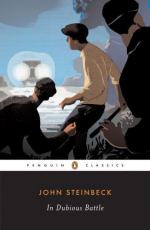
Steinbeck, standing apart from both the contemporary naturalists and the new novel of sensibility that one finds in Faulkner and Wolfe, brought a fresh note into contemporary fiction because he promised a realism less terror-ridden than the depression novel, yet one consciously responsible to society; a realism mindful of the terror and disorganization of contemporary life, but not submissive to the spiritual stupor of the time; a realism equal in some measure, if only in its aspiration, to the humanity, the gaiety, the wholeness, of realism in a more stable period…. Steinbeck is a greater humanist [than Farrell], and there is a poetry in some of his best work, particularly The Long Valley stories and The Pastures of Heaven, that naturalists of Farrell's stamp have never been able to conceive. But there is something imperfectly formed about Steinbeck's work; it has no creative character. For all his moral serenity, the sympathetic understanding of men under strain that makes a strike novel like In Dubious Battle so notable in the social fiction of the period, Steinbeck's people are always on the verge of becoming human, but never do. There is a persistent failure to realize human life fully in his books, where the characters in many American naturalistic novels have simply ceased to be human. After a dozen books Steinbeck still looks like a distinguished apprentice, and what is so striking in his work is its inconclusiveness, his moving approach to human life and yet his failure to be creative with it.

This is a free excerpt of 314 words. There are 1,677 words (approx. 6 pages at 300 words per page) in the full critical essay.

Read the rest of this Criticism with our Steinbeck, John 1902–1968: Critical Essay by Alfred Kazin Access Pass.

Copyrights
Steinbeck, John 1902–1968: Critical Essay by Alfred Kazin from Literature Criticism Series. ©2005-2006 Thomson Gale, a part of the Thomson Corporation. All rights reserved.

Join BookRagslearn moreJoin BookRags


About BookRags | Customer Service | Report an Error | Terms of Use | Privacy Policy

