
BookRags.com Literature Guides Literature Guides Criticism/Essays Criticism/Essays Biographies Biographies My Bibliography Periodic Table U.S. Presidents Shakespeare Sonnet Shake-Up
Research Anything:        
History | Encyclopedias | Films | News | Create a Bibliography | More... Login | Register | Help


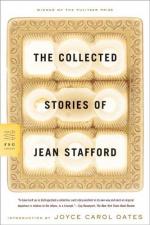
Stafford, Jean 1915–1979: Critical Essay by Joyce Carol Oates

Print-Friendly  Order the PDF version  Order the RTF version
About 2 pages (650 words)
Jean Stafford Summary

Bookmark and Share

Certainly the stories [of Jean Stafford] are exquisitely wrought, sensitively imagined like glass flowers, or arabesques, or the 'interior castle' of Pansy Vanneman's brain ("Not only the brain as the seat of consciousness, but the physical organ itself which she envisioned, romantically, now as a jewel, now as a flower, now as a light in a glass, now as an envelope of rosy vellum containing other envelopes, one within the other, diminishing infinitely")…. Dramatic tension is subdued, in a sense forced underground, so that while narrative conflict between individuals is rare, an extraordinary pressure is built up within the protagonists, who appear trapped inside their own heads, inside their lives (or the social roles their 'lives' have become), and despair of striking free. Intelligence and self-consciousness and even a measure of audacity are not quite enough to assure freedom, as the heroines of the late stories "Beatrice Trueblood's Story" and "The End of a Career" discover painfully…. The finest of Jean Stafford's stories possess an eerily elegiac tone, though they are never morbid or self-pitying. "In the Zoo" tells a frightful tale, the narrator confesses that "my pain becomes intolerable," but the story concludes with an extravagant outburst of paranoia that manages to be comic as well as distressing…. (p. 61)

This is an art that curves inward toward the meditative, the reminiscent, given life not by bold gestures or strokes but by a patient accumulation of sharply-observed impressions: the wealth of a poet's eye, or a painter's. "The Lippia Lawn", for instance, is an exercise in recollection, so graphically presented as to allow the reader to share in the young woman's grasping, groping effort to isolate an image out of her past. (pp. 61-2)

This is a free excerpt of 284 words. There are 650 words (approx. 2 pages at 300 words per page) in the full critical essay.

Read the rest of this Criticism with our Stafford, Jean 1915–1979: Critical Essay by Joyce Carol Oates Access Pass.

Copyrights
Stafford, Jean 1915–1979: Critical Essay by Joyce Carol Oates from Literature Criticism Series. ©2005-2006 Thomson Gale, a part of the Thomson Corporation. All rights reserved.

Join BookRagslearn moreJoin BookRags


About BookRags | Customer Service | Report an Error | Terms of Use | Privacy Policy

