
 Print
Print Word
Word PDF
PDF|
This section contains 340 words (approx. 2 pages at 300 words per page) |

|
The right things certainly happen in Jaws. At given moments, the images before us lead to frissons of dread anticipation. The pulses pound. Excitement escalates. And by climax time, when it is impossible to disbelieve that one of the leading actors, screaming and vomiting blood, is actually being swallowed alive by a gigantic shark in an unnerving series of gulps, we are watching movie magic of the highest order. Trickery has mastered the illusion of truth.
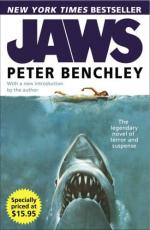
The film is a condensation of Peter Benchley's novel, which deals not only in the suspense value of abrupt lethal sorties by a great white shark among the swimmers at a Long Island resort, but also in the attempts of local plenipotentiaries to hush up the danger so that the town will not suffer economically by a decrease in the number of its summertime tourists, on whom its very existence depends. The...
|
This section contains 340 words (approx. 2 pages at 300 words per page) |
|



