
BookRags.com Literature Guides Literature
Guides
Criticism & Essays Criticism &
Essays
Questions & Answers Questions &
Answers
Lesson Plans Lesson
Plans
My Bibliography Periodic Table U.S. Presidents Shakespeare Sonnet Shake-Up
Research Anything:        
History | Encyclopedias | Films | News | Create a Bibliography | More... Login | Register | Help

Not What You Meant?  There are 3 definitions for A Tree Grows in Brooklyn.

Smith, Betty 1896–1972: Critical Essay by Richard Sullivan

Print-Friendly  Order the PDF version  Order the RTF version
Betty Smith
About 2 pages (509 words)
A Tree Grows in Brooklyn (novel) Summary

Bookmark and Share Know this topic well? Help others and get FREE products!

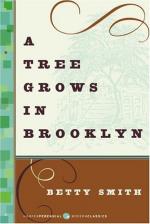
["A Tree Grows in Brooklyn" and "Tomorrow Will Be Better"], though quite different in intention and effect, have several obvious elements in common. They are both drawn from the same level of American society; they both deal with family life in Brooklyn. (Incidentally, in this very consistency of substance there is a admirable suggestion of integrity: here is a novelist sticking carefully to what she knows, to material she can responsibly handle, without faking or long-range research.) Again, both books exhibit the same fine warmth, the same intense, almost brooding tenderness for people. In both there is a quick feeling for pathos and for absurdity, and a talent for discovering, through fervent insight, the quality of simple, true drama in ordinary lives. Finally, both novels share the benefits of a prose style remarkable for its unpretentiousness—an easy, tidy, direct kind of prose which calls no attention to itself as a medium, but which by its very unself-consciousness lets the experience shine immediately through the transparent words.

Yet in spirit the two novels are noticeably different. By contrast with its successor, "The Tree" now seems in retrospect a more racy, more spontaneous, more joyous work. One might speculate as to whether the author, pondering on that body of material which she has made her own, has not developed during the years a graver, more somberly complicated attitude toward it. "Tomorrow Will Be Better" is not a more serious book than its predecessor; but is is a more deliberate book; and it is also, despite its title, a far less hopeful one.

This is a free excerpt of 259 words. There are 509 words (approx. 2 pages at 300 words per page) in the full critical essay.

Read the rest of this Criticism with our Smith, Betty 1896–1972: Critical Essay by Richard Sullivan Access Pass.

Ask any question on A Tree Grows in Brooklyn (novel) and get it answered FAST!
Answer questions in BookRags Q&A and earn points toward
discounted or even FREE Study Guides and other BookRags products!
Learn more about BookRags Q&A
Copyrights
Smith, Betty 1896–1972: Critical Essay by Richard Sullivan from Literature Criticism Series. ©2005-2006 Thomson Gale, a part of the Thomson Corporation. All rights reserved.

Join BookRagslearn moreJoin BookRags


About BookRags | Customer Service | Report an Error | Terms of Use | Privacy Policy

