
BookRags.com Literature Guides Literature
Guides
Criticism & Essays Criticism &
Essays
Questions & Answers Questions &
Answers
Lesson Plans Lesson
Plans
My Bibliography Periodic Table U.S. Presidents Shakespeare Sonnet Shake-Up
Research Anything:        
History | Encyclopedias | Films | News | Create a Bibliography | More... Login | Register | Help

Not What You Meant?  There are 40 definitions for High anxiety.  Also try: Rebecca.

(Sir) Hitchcock, Alfred 1899–1980: Critical Essay by Eric Rohmer and Claude Chabrol

Print-Friendly  Order the PDF version  Order the RTF version
Alfred Hitchcock
About 7 pages (2,222 words)
Rebecca (film) Summary

Bookmark and Share Questions on this topic? Just ask!

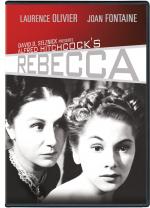
With Rebecca, the "Hitchcock touch," which has previously been merely a distinguishing feature, becomes a vision of the world. Spontaneity submits to a system. This is a critical moment for an artist, for he must not develop tics, a pedagogical fury. Hitchcock was to avoid these traps. From now on, the two poles of his future work—because we can now talk of a body of work—are clear. One is fascination, moral captation—in other words, depersonalization, schism: in psychoanalytic terms, schizophrenia; in philosophic terms, amoralism; in Baudelairean terms, the assumption of evil, damnation. The other pole is its opposite: knowledge—or, more exactly, reknowledge—of self, unity of being, acceptance, confession, absolute communion. (p. 58)

Alfred Hitchcock's stories come from a great variety of sources, but very early on, he began to alter them in his own way, setting to work on the double job of purifying and enriching them. First he trims the basic idea to bring out a pure relation of force between the characters. Once this has been established, he draws from it, like so many consequences of this relationship, each of the events of the plot. Generally speaking, this deduction operates on two parallel levels, the physical and the moral, and establishes a relation of symbol to idea. (pp. 106-07)

This is a free excerpt of 210 words. There are 2,222 words (approx. 7 pages at 300 words per page) in the full critical essay.

Read the rest of this Criticism with our (Sir) Hitchcock, Alfred 1899–1980: Critical Essay by Eric Rohmer and Claude Chabrol Access Pass.

Ask any question on Rebecca (film) and get it answered FAST!
Answer questions in BookRags Q&A and earn points toward
discounted or even FREE Study Guides and other BookRags products!
Learn more about BookRags Q&A
Copyrights
(Sir) Hitchcock, Alfred 1899–1980: Critical Essay by Eric Rohmer and Claude Chabrol from Literature Criticism Series. ©2005-2006 Thomson Gale, a part of the Thomson Corporation. All rights reserved.


Join BookRagslearn moreJoin BookRags


About BookRags | Customer Service | Report an Error | Terms of Use | Privacy Policy

