
BookRags.com Literature Guides Literature Guides Criticism/Essays Criticism/Essays Biographies Biographies My Bibliography Periodic Table U.S. Presidents Shakespeare Sonnet Shake-Up
Research Anything:        
History | Encyclopedias | Films | News | Create a Bibliography | More... Login | Register | Help
Not What You Meant?  There are 14 definitions for Jungle.


Sinclair, Upton 1878–1968: Critical Essay by Robert Cantwell

Print-Friendly  Order the PDF version  Order the RTF version
Upton Sinclair
About 3 pages (974 words)
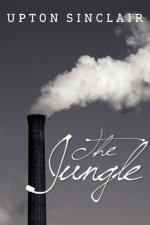
The Jungle Summary

Bookmark and Share

Van Wyck Brooks's criticism of Sinclair's novels [see excerpt above] was that they create a mood of self-pity—that they invite a workman to feel sorry for himself rather than to develop his intelligence and study the world around him and the forms of action that are possible for him. The point is good, but it is not very relevant: Sinclair has scarcely attempted to interpret working-class life since The Jungle. His typical story is that of a rich young man who gets mixed up in the radical movement, and the drama lies in the dissolution of his ruling-class dogmas—the pattern of King Coal, Roman Holiday and Oil! His strongest and most original characterizations are middle-class types like Bunny's father in Oil! or the cranky old single-tax millionaire of Mountain City—people more or less akin to the George Herrons and Gaylord Wiltshires of his early days as a writer—while the miners around Hal in King Coal, or the oil workers around Bunny in Oil!, or the rank and file of the coöperative movement in Co-Op, serve primarily as background high-lighting the situations of the aristocrats. For a decade after The Jungle, Sinclair's fiction dealt almost entirely with upper-class life—in The Metropolis, The Moneychangers, Sylvia and Sylvia's Marriage—and he did not return to working-class subjects and working-class characters until he wrote King Coal in 1917.

Their influence is hardly more apparent in Sinclair's work than in that of his less politically conscious contemporaries. In Oil!, for example, Sinclair found it possible to write an exhaustive study of the industry, including a long and vivid description of how wells are drilled, without giving an account of what the oil workers themselves actually do. The limitation does not merely result in a general one-sidedness in his panorama—it accounts for a blurring of the technical descriptions and an elementary sort of vagueness in the prose. In Roman Holiday the same limitation is more strikingly dramatized—the young millionaire has come into direct conflict with the workers and has been responsible for the death of a working-class leader, whereupon the novel breaks in two, with its second section laid in ancient Rome and its ruling-class dilemma repeated in that antique setting.

This is a free excerpt of 363 words. There are 974 words (approx. 3 pages at 300 words per page) in the full critical essay.

Read the rest of this Criticism with our Sinclair, Upton 1878–1968: Critical Essay by Robert Cantwell Access Pass.

Copyrights
Sinclair, Upton 1878–1968: Critical Essay by Robert Cantwell from Literature Criticism Series. ©2005-2006 Thomson Gale, a part of the Thomson Corporation. All rights reserved.

Join BookRagslearn moreJoin BookRags


About BookRags | Customer Service | Report an Error | Terms of Use | Privacy Policy

