
BookRags.com Literature Guides Literature
Guides
Criticism & Essays Criticism &
Essays
Questions & Answers Questions &
Answers
Lesson Plans Lesson
Plans
My Bibliography Periodic Table U.S. Presidents Shakespeare Sonnet Shake-Up
Research Anything:        
History | Encyclopedias | Films | News | Create a Bibliography | More... Login | Register | Help

Search "Sartre, Jean-Paul 1905–1980: Critical Essay by Fredric Jameson"

Criticism Navigation
 

Sartre, Jean-Paul 1905–1980: Critical Essay by Fredric Jameson

Print-Friendly  Order the PDF version  Order the RTF version
Jean-Paul Sartre
About 5 pages (1,360 words)
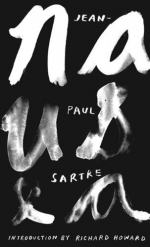
Nausea (book) Summary

Bookmark and Share

Jean-Paul Sartre, whose first novel, "Nausea," had a biographer as its hero, spent the last 10 years of his working life on a massive psychobiography of a writer he had always detested for his estheticism and his reactionary opinions—Gustave Flaubert. He customarily explained this curious project as an attempt to synthesize what can be understood today about an individual life, given what we have learned from a century of work in psychoanalysis, social psychology, linguistics, anthropology and the symbolic analysis of culture and individual behavior. But for Sartre, understanding always involved the discovery of that point at which all constraints—external accidents, the miseries of psychic determinism and social conditioning—are suddenly transformed into the active gestures and free choices of an individual—what he called "praxis." It is never easy to reach that magical point. "The Family Idiot" takes some 3,000 pages to get there….

Sartre called "The Family Idiot" a "true novel," and it does tell a story and eventually reach a shattering climax. The work can be described most simply as a dialectic, which shifts between two seemingly alternative interpretations of Flaubert's destiny: a psychoanalytic one, centered on his family and on his childhood, and a Marxist one, whose guiding themes are the status of the artist in Flaubert's period and the historical and ideological contradictions faced by his social class, the bourgeoisie. But there is no determinism in his approach, for Sartre insisted on seeing contradictions—whether psychic-familial or socio-economic—as so many situations for which we cannot but invent responses: "Neurosis," as he says in an earlier work, "is an original solution the child invents on the point of stifling to death."

This is a free excerpt of 271 words. There are 1,360 words (approx. 5 pages at 300 words per page) in the full critical essay.

Read the rest of this Criticism with our Sartre, Jean-Paul 1905–1980: Critical Essay by Fredric Jameson Access Pass.

Copyrights
Sartre, Jean-Paul 1905–1980: Critical Essay by Fredric Jameson from Literature Criticism Series. ©2005-2006 Thomson Gale, a part of the Thomson Corporation. All rights reserved.


Join BookRagslearn moreJoin BookRags


About BookRags | Customer Service | Report an Error | Terms of Use | Privacy Policy

