
 Print
Print Word
Word PDF
PDF|
This section contains 891 words (approx. 3 pages at 300 words per page) |

|
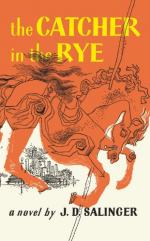
What meaning, if any, can one attach to the expression 'a key book of the present decade'? It is used as a blurb in a … reprint of [The Catcher in the Rye]…. Whoever remembers the book will suppose that this is a serious claim, implying perhaps that The Catcher, as well as being extremely successful, is a work of art existing in some more or less profound relationship with the 'spirit of the age.' It is, anyway, quite different from saying that No Orchids for Miss Blandish is a key book. On the other hand, there is an equally clear distinction between this book and such key novels as Ulysses or A Passage to India. For it is elementary that, although these books have been read by very large numbers of people, one may reasonably distinguish between a smaller, 'true' audience and bigger audiences which read them...
|
This section contains 891 words (approx. 3 pages at 300 words per page) |
|



