
BookRags.com Literature Guides Literature
Guides
Criticism & Essays Criticism &
Essays
Questions & Answers Questions &
Answers
Lesson Plans Lesson
Plans
My Bibliography Periodic Table U.S. Presidents Shakespeare Sonnet Shake-Up
Research Anything:        
History | Encyclopedias | Films | News | Create a Bibliography | More... Login | Register | Help


Salinger, J(erome) D(avid) 1919–: Critical Essay by Geraldine De Luca

Print-Friendly  Order the PDF version  Order the RTF version
J. D. Salinger
About 3 pages (778 words)
The Catcher in the Rye Summary

Bookmark and Share Know this topic well? Help others and get FREE products!

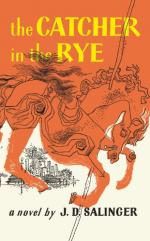
[One] can say, in dubious celebration of Salinger, that The Catcher in the Rye is the one book that the adolescent novel comes from. It is a difficult, deceptive heritage; satirical and ostensibly designed to offer a clearer mode of life and thought than that which the heroes witness. But certainly in Salinger's case …, there really are no alternatives. One's only salvation is to remain a child.

Even in his works about the Glass Family, where he has turned to the adult world, Salinger is still celebrating childhood. While the Glass family can get quickly under one's skin, the books ultimately do not satisfy because the characters never quite get past what Zooey himself termed their "tenth-rate nervous breakdowns," never accepting or confronting the ills of the adult world that so oppress them. They remain Salinger's children, sanctified and damaged by their sensibilities.

This is a free excerpt of 143 words. There are 778 words (approx. 3 pages at 300 words per page) in the full critical essay.

Read the rest of this Criticism with our Salinger, J(erome) D(avid) 1919–: Critical Essay by Geraldine De Luca Access Pass.

Ask any question on The Catcher in the Rye and get it answered FAST!
Answer questions in BookRags Q&A and earn points toward
discounted or even FREE Study Guides and other BookRags products!
Learn more about BookRags Q&A
Copyrights
Salinger, J(erome) D(avid) 1919–: Critical Essay by Geraldine De Luca from Literature Criticism Series. ©2005-2006 Thomson Gale, a part of the Thomson Corporation. All rights reserved.


Join BookRagslearn moreJoin BookRags


About BookRags | Customer Service | Report an Error | Terms of Use | Privacy Policy

