
BookRags.com Literature Guides Literature Guides Criticism/Essays Criticism/Essays Biographies Biographies My Bibliography Periodic Table U.S. Presidents Shakespeare Sonnet Shake-Up
Research Anything:        
History | Encyclopedias | Films | News | Create a Bibliography | More... Login | Register | Help
Not What You Meant?  There are 10 definitions for Brass monkey.


Rushdie, (Ahmed) Salman 1947–: Critical Essay by Valentine Cunningham

Print-Friendly  Order the PDF version  Order the RTF version
Salman Rushdie
About 4 pages (1,061 words)
Midnight's Children Summary

Bookmark and Share

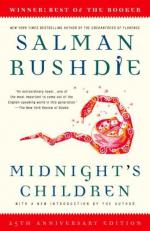
India is so big, so crowded, so jammed full of the fascinatingly particular, so awingly representative of human variety, that a novel pretending to India as subject can't avoid the question of how novels in general may claim truthfully to cope with the daunting vastnesses, the multiplicities of things and persons. What makes Midnight's Children so extraordinarily important, and moreover (for literary importance isn't always matched by a fetching readability), what makes it so vertiginously exciting a reading experience, is the way it takes in not just the whole apple cart of India and the problem of being a novel about India but also, and this with the unflagging zest of a Tristram Shandy, the business of being a novel at all. "Is this an Indian disease, this urge to encapsulate the whole of reality?" speculates writing narrator Saleem Sinai. No, he implies, by way of reply, it's a novelist's disease; but one to be opened up for inspection, foregrounded as they say, nowhere more aptly and revelatorily than in an ambitious fiction of India….

If Indians are, as [Rushdie] says, "obsessed with correspondences"—"Similarities between this and that, between apparently unconnected things, make us clap our hands delightedly when we find them out. It is a sort of national longing for form"—then Saleem's narrative exhibits the national craving in super-abundance. It writes history, we might say by way of compliment, on the Walter Benjamin model, spinning webs of meaning around pepperpots and bicycles, spittoons and Mrs Ghandi's parted hair….

This is a free excerpt of 248 words. There are 1,061 words (approx. 4 pages at 300 words per page) in the full critical essay.

Read the rest of this Criticism with our Rushdie, (Ahmed) Salman 1947–: Critical Essay by Valentine Cunningham Access Pass.

Copyrights
Rushdie, (Ahmed) Salman 1947–: Critical Essay by Valentine Cunningham from Literature Criticism Series. ©2005-2006 Thomson Gale, a part of the Thomson Corporation. All rights reserved.

Join BookRagslearn moreJoin BookRags


About BookRags | Customer Service | Report an Error | Terms of Use | Privacy Policy

