
 Print
Print Word
Word PDF
PDF|
This section contains 649 words (approx. 3 pages at 300 words per page) |

|
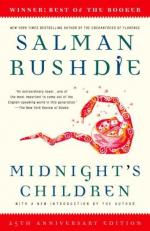
[Because Midnight's Children relates] the progress of the political juggernaut through the Indian subcontinent—the juggernaut being literally a religious procession taken through the land in celebration, although said to leave behind a wake of destruction—one might expect a dark and somber treatise. It is nothing of the sort. On the contrary, Midnight's Children burgeons with life, with exuberance and fantasy. It has the same effect on the eyes and the ears as a magnificent circus performance—a scene that is brilliant with color, zest, dare-devilry and loud bravado. The language is as full and copious as a flood or fire of tremendous proportions. If Midnight's Children is sprawling and untidy, then it shares these characteristics with such natural phenomena. If there are many deaths and acts of destruction in the novel, then every death seems merely to fertilize the Indian soil so that 10 heads spring up...
|
This section contains 649 words (approx. 3 pages at 300 words per page) |
|



