
BookRags.com Literature Guides Literature
Guides
Criticism & Essays Criticism &
Essays
Questions & Answers Questions &
Answers
Lesson Plans Lesson
Plans
My Bibliography Periodic Table U.S. Presidents Shakespeare Sonnet Shake-Up
Research Anything:        
History | Encyclopedias | Films | News | Create a Bibliography | More... Login | Register | Help


Rand, Ayn 1905–1982: Critical Essay by Philip Gordon

Print-Friendly  Order the PDF version  Order the RTF version
Ayn Rand
About 4 pages (1,310 words)
The Fountainhead Summary

Bookmark and Share Know this topic well? Help others and get FREE products!

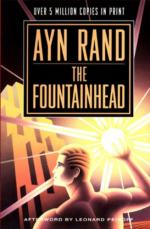
Throughout her long career as popular author and philosophizer, Ayn Rand has concentrated on her individualist-heroes to formulate from their absolute dedication to their own self-interests the model for all mankind. In contrast to those who have seen in the economic crises of the twentieth century the waste of capitalism, Rand, obsessed with the fear of collectivist association, has seen universal salvation possible only through even more intensive laissez-faire capitalism. In so far as exposing Rand's politics to a more enlightened historical awareness would be like smashing a pea with a hammer, this brief study suggests instead some intersections of Rand's fiction-tracts and popular culture in an attempt to explain the nature of her enormous appeal. While providing an ever-increasing audience with the soothing rationalization of self-primacy, all of Rand's works, but particularly The Fountainhead (1943) expose the sharpness of the familiar line drawn between self and other; and thus she challenges us to recognize that the society which does not encourage individualism invites a tyranny of bland mediocrity. (p. 701)

In the thirties, when American capitalism's breakdown was so conspicuous and its breakup so urgent, Rand's overwhelming fear of anything collective harmonized with the American myth of rugged individualism, and her fiction assumed a prophetic air. In her second novel, Anthem (1938), Rand created a science-fictional scenario of "total collectivism with all of its ultimate consequences; men have relapsed into primitive savagery and stagnation; the word I has vanished from the human language, there are no singular pronouns, a man refers to himself as we and to another man as they." To combat that absolute lack of individuality, Rand's new heroes operate with an absolute lack of flexibility. Crucial discoveries, of man and nature, can only be made by "a man of intransigent mind," whose theme, to be sung in Rand's subsequent novels of "rational self-interest," is typically simplistic: "Many words have been granted to me," Anthem's hero proclaims, "and some are wise, and some are false, but only three are holy: 'I will it.'" Rand's sacred word is unmistakably "EGO." (pp. 701-02)

This is a free excerpt of 343 words. There are 1,310 words (approx. 4 pages at 300 words per page) in the full critical essay.

Read the rest of this Criticism with our Rand, Ayn 1905–1982: Critical Essay by Philip Gordon Access Pass.

Ask any question on The Fountainhead and get it answered FAST!
Answer questions in BookRags Q&A and earn points toward
discounted or even FREE Study Guides and other BookRags products!
Learn more about BookRags Q&A
Copyrights
Rand, Ayn 1905–1982: Critical Essay by Philip Gordon from Literature Criticism Series. ©2005-2006 Thomson Gale, a part of the Thomson Corporation. All rights reserved.

Join BookRagslearn moreJoin BookRags


About BookRags | Customer Service | Report an Error | Terms of Use | Privacy Policy

