
 Print
Print Word
Word PDF
PDF|
This section contains 260 words (approx. 1 page at 300 words per page) |

|
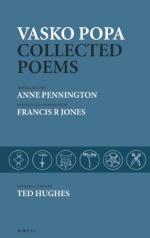
[Earth Erect] reproduces only four poems from the ample Penguin selection of Vasko Popa's work. These and thirty-two new translations are arranged in cycles: first, the stations of a pilgrimage (evoking ancient Serbian shrines); then St Sava's Spring (reviving the patron saint of Serbia, who milks the stones of the hillside to succour his wolves, the Serbs); scenes of Serbian defeat (providing tenuous reasons against despair—skulls that flower with laughter, blood streaming into the sun from an erect field) before the return, with ghosts of martyrs and heroes, to Belgrade, the hope for the future.
What on first reading appear as enigmatic flights of fancy presented matter-of-factly become, with the aid of an historical sketch, psalms rooted in tradtiton…. The language of ["Supper on the Blackbird's Field"] is plain and fabulous, its images clear and daedalian. The field was where the Ottomans routed the Serbs in 1389. Prince...
|
This section contains 260 words (approx. 1 page at 300 words per page) |
|



