
 Print
Print Word
Word PDF
PDF|
This section contains 216 words (approx. 1 page at 300 words per page) |

|
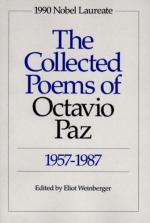
[In the poems of Octavio Paz] I recognized the paradox which haunts us all, which makes of art criticism a perpetually unsatisfactory endeavor. I recognized that if the word springs ahead of thought, as Octavio said, and if it rises from the written page, and if, as he keeps repeating in all his poetry, the presencia arrives by means forever undisclosed, so does the painted image. What is true about the image, or presencia, is precisely what cannot be rendered through any other image, and especially not through that logic encountered at the circumference of experience. What I knew about visual art, I found confirmed by Octavio's poetry. (p. 32)
The mirrors and bridges and apparitions which course in the timeless currents of Octavio's creations, surfacing in the most unexpected moments to pose the paradox of creation itself, are finally justified by his faith in the presencia—which after...
|
This section contains 216 words (approx. 1 page at 300 words per page) |
|



