
 Print
Print Word
Word PDF
PDF|
This section contains 350 words (approx. 2 pages at 300 words per page) |

|
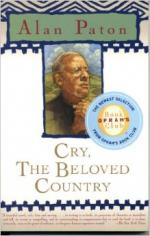
[Alan Paton] started what seems to me almost a new era in South African writing. What is interesting about it is that other people had written not much less competently the sort of thing which Paton wrote in Cry, the Beloved Country, but somehow they did not set in motion the kind of cycle which Paton did. If you know Cry, the Beloved Country, you will know that it is a rather simple story. It is a narration of a black man in contact with a society which he doesn't really understand—a society in which he finds himself either unable to cope, or he finds himself sucked into the worst elements of that society. He ends as a criminal and the society is accused of having made him a criminal. All this is really very straightforward and, in a sense, almost trite—and I don't think Paton...
|
This section contains 350 words (approx. 2 pages at 300 words per page) |
|



