
 Print
Print Word
Word PDF
PDF|
This section contains 566 words (approx. 2 pages at 300 words per page) |

|
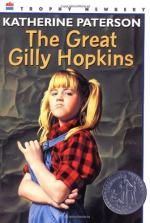
[The Great Gilly Hopkins] is a book which, having a choice to make between a happy ending and a hard one—both being reasonable—chooses the latter, thereby finally declaring itself as something rather different from what it has led the readers to expect. For the story line has healthy antecedents in literature from Oliver Twist onward: an abandoned child, stranded in a bizarre place among bizarre people, learns how to value herself and others. (p. 1)
Katherine Paterson develops her characters thoroughly, avoiding the common pitfalls of stories of this type. While she eschews Dickensian sentimentality, she is strong on humor, and her writing is clear, inventive, and—except for a single line from the social worker, "God help the children of the flower children,"—entirely nonjudgmental. Gilly is a liar, a bully, a thief; and yet, because Paterson is interested in motivations rather than moralizing, the reader...
|
This section contains 566 words (approx. 2 pages at 300 words per page) |
|



