
 Print
Print Word
Word PDF
PDF|
This section contains 203 words (approx. 1 page at 300 words per page) |

|
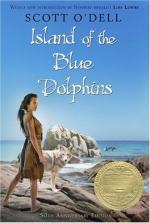
["Island of the Blue Dolphins"] is a romance only in the older sense of the word. It has no hero, no frills, none of the usual feminine props, but I think that thoughtful readers will be willing to forego these for the sake of an unusual experience.
The setting is a remote California island where, from 1835 to 1853 an Indian woman, known to history as the Lost Woman of San Nicolas lived alone. Mr. O'Dell has used the few facts known about her as the basis for a haunting story of a young 
|
This section contains 203 words (approx. 1 page at 300 words per page) |
|



