
 Print
Print Word
Word PDF
PDF|
This section contains 428 words (approx. 2 pages at 300 words per page) |

|
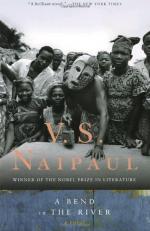
Reading V. S. Naipaul's new novel A Bend In The River, one is easily reminded of Heart Of Darkness. Resemblances quickly declare themselves…. Conrad's novel is of a time of European ascendancy. Naipaul's book succeeds Conrad's and like it may come to be seen in time as one of the very best things written about Africa. The difference is that A Bend In The River is the story of European, Arab and Asian eclipse…. [Nothing] is pre-ordained in A Bend In The River. True, men are at the mercy of events, the smart men of the town, the soldiers and politicians as much as the poor Africans who scrape a living, or as often do not, from forest and river…. The novel assesses three things: firstly the insecurity Salim feels about his identity as an 'African' Asian and his curious relationship with 'true' Africa, coming as he does...
|
This section contains 428 words (approx. 2 pages at 300 words per page) |
|



