
 Print
Print Word
Word PDF
PDF|
This section contains 424 words (approx. 2 pages at 300 words per page) |

|
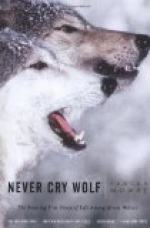
Farley Mowat is a trained scientist with a skeptic's mind. There is need to recall this at the outset, because in ["Never Cry Wolf"] he strains his readers' credulity to a point at which it would certainly snap in less trustworthy hands….
To some, no doubt, it will be a surprise that he found every wolf fable a fallacy, and over the months developed a profound affection and admiration for his study subjects, which he found to be kingly creatures possessed of every virtue and no vice, neighbors who accepted his presence with neither fear nor ferocity. He had names for each of them, and the book is dedicated to the wolf bitch: "For Angeline—the angel." He found the wolves capable of something akin to speech—the conveyance, that is, of more or less complex thought between wolf and wolf. Their staple food during the summer months...
|
This section contains 424 words (approx. 2 pages at 300 words per page) |
|



