
 Print
Print Word
Word PDF
PDF|
This section contains 883 words (approx. 3 pages at 300 words per page) |

|
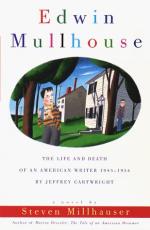
Steven Millhauser's first novel, "Edwin Mullhouse: The Life and Death of an American Writer, 1943–1954, by Jeffrey Cartwright," is probably the best Nabokovian novel not written by the master himself…. As it turns out, the back-and-forths through which the biographer invents his author and the author his biographer stir the mind and agitate the emotions as unexpectedly as do the ins and outs through which nature and art invent each other in Nabokov—through which, for example, the critic Kinbote and the poet John Shade invent each other in "Pale Fire." Millhauser's demonstration that the preadolescent imagination is a lost genius within us all provides the Nabokovian note of pathos. That the author's name is so close to his character's (Millhauser/Mullhouse) adds reflections for us to reflect upon. (p. 13)
"A work of fiction is a radical act of the imagination whose sole purpose is to supplant the world...
|
This section contains 883 words (approx. 3 pages at 300 words per page) |
|



