
 Print
Print Word
Word PDF
PDF|
This section contains 272 words (approx. 1 page at 300 words per page) |

|
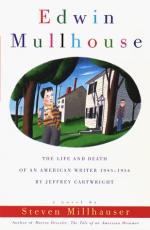
Steven Millhauser, it seems to me, is attempting to do several things with his novel ["Edwin Mullhouse"]. First, and perhaps basically, he is writing a subtle satire on all of those biographies, which we occasionally find ourselves reading, that deal with the lives of people we never heard of when they were alive, and probably would not have cared much about if we did. You know the type. Ponderous details abound, regardless…. Unfortunately, there is such a thing as doing a job too well. Satirizing ponderousness is all very well, until it becomes ponderous.
Another facet of the book is, one suspects, designed to show the fabulous time that is childhood, with its constant discovery and continuing mysteries. Personally, I don't think childhood is that wonderful (at least mine wasn't, but perhaps I was deprived). Mr. Millhauser's favorite device for exhibiting the wonderfulness (to borrow a word from...
|
This section contains 272 words (approx. 1 page at 300 words per page) |
|



