
 Print
Print Word
Word PDF
PDF|
This section contains 317 words (approx. 2 pages at 300 words per page) |

|
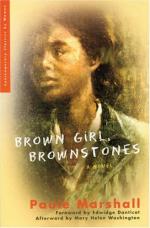
When Mrs. Marshall writes about those she truly loves, she cannot be resisted. Her singularly talented first novel ["Brown Girl, Brownstones"] describes the childhood and adolescence of a Brooklyn girl whose parents, both Barbadian immigrants, share an unhappy marriage and a memory of their native island…. To Selina's mother, Silla, the island represents poverty, oppression, and a poetry and beauty that she misses and despises. To her father, Deighton, the island is his heart's desire, and he longs to return to it. When an unexpected legacy gives Deighton two acres of island land, he begins to make plans to return home and build a house. Although he has never succeeded at any of the various trades he has taken up in his efforts to raise himself in life, he believes he can make the money to go home and claim a splendid place for himself in his own...
|
This section contains 317 words (approx. 2 pages at 300 words per page) |
|



