
BookRags.com Literature Guides Literature
Guides
Criticism & Essays Criticism &
Essays
Questions & Answers Questions &
Answers
Lesson Plans Lesson
Plans
My Bibliography Periodic Table U.S. Presidents Shakespeare Sonnet Shake-Up
Research Anything:        
History | Encyclopedias | Films | News | Create a Bibliography | More... Login | Register | Help

Search "Malamud, Bernard 1914–: Critical Essay by James M. Mellard"

Criticism Navigation
 

Malamud, Bernard 1914–: Critical Essay by James M. Mellard

Print-Friendly  Order the PDF version  Order the RTF version
Bernard Malamud
About 2 pages (725 words)
The Natural Summary

Bookmark and Share

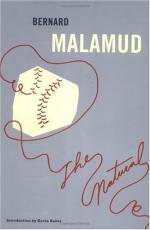
[The] work of Bernard Malamud seems very much to exhibit [a] strain of naive-modernist fiction, though, like Bellow's, it is largely a work of critical consolidation. If Bellow is in the "hotter" tradition of James, Malamud takes the "cooler" modes of an early modern like Anderson, assimilates them, and makes them his own, though he does not really (nor does he need to) transform them. But Malamud's best work is no simple art. He uses as effectively as any critical modernist the basic epistemological mode of the lyric novelist in order to treat themes of alienation and suffering, at the same time that he uses the modes—which he begins to parody—of comedy and tragedy, the ironic and the romantic. In The Natural he draws upon the tradition—largely popular—of sports fiction in America, one seen or felt vividly in Anderson, Ring Lardner, Hemingway, Fitzgerald, and even Faulkner. In The Assistant, as Malamud creates an urban landscape as vital but threatening as any from the naive tradition of American naturalism, he also creates a hero who is as powerless, as psychically indeterminate, and as bent upon self-definition as one of Bellow's "dangling men." In A New Life Malamud writes yet another of those "academic novels" with which American fiction abounds; in The Fixer he turns to the treatment of an actual historical crime and punishment, similar in some ways to An American Tragedy and Native Son; Pictures of Fidelman, like Winesburg, Ohio and several works in Faulkner, is a cycle of stories focusing upon the development of one character. The Tenants seems to owe less to other fictions than to the allusively poetic world of Shakespeare's The Tempest, yet it, too, depends upon the sort of intellectual, physical, even erotic conflict between Black American and White that we see in Faulkner, Warren, Baldwin, Styron, and Updike.

The tradition in Malamud, as it had been for the naive modernists, becomes epistemological and ontological, the performative and pastoral elements providing both a way of knowing and a content to be known. The mode of perception that the performative voice gives Malamud allows him to exploit fully the resources of the pastoral as a content. Through it Malamud can employ very simple people as his protagonists, antagonists, and supporting characters; these people can accept their own most foolish, as well as their own most heroic, actions in the most matter-of-fact ways; and they can talk about themselves, their world, and its values in the most uncritical vocabularies available to the popular mind. Moreover, the pastoral mode permits him to structure his plots as if they belonged to the mythoi of tragedy and comedy. But, while Malamud's voice seems to validate the ways in which his characters see the world, in his best novels—The Natural, The Assistant, The Fixer—there is always a note of parody that comes out of his use of popular "myths" such as the tragedy of the ball player Shoeless Joe Jackson, the ecstatic romance of St. Francis of Assisi, and the nightmare terrors of Russian Bolshevism. That undercurrent of parody, as one expects in a modernist work, leaves forms and meanings subtly indeterminate. Like Faulkner, Malamud is disposed—as the Russian formalists say—toward "baring his devices," as he forces us to study his fictive worlds at the same time that we regard his epistemological and ontological modes, but less like early Faulkner than like the critical modernists, he opts for formal openness rather than for formal pluralism. Malamud's exploiting the possibilities of pastoral and the naive popular consciousness, however, pushes him slightly closer than, for example, Saul Bellow to the late modernism of Vonnegut and Brautigan; still, one would not wish to overstate their differences. One must agree with Max Schulz's views of Malamud and the modern Jewish novelists in general: "… willingness to accept the world on its own terms—disorderly, incoherent, absurd—'without any irritable reaching after fact and reason,' and yet without losing faith in the moral significance of human actions, underlies the confrontation of experience in the best of the contemporary Jewish American novels." (pp. 152-54)

This is a free excerpt of 674 words. There are 725 words (approx. 2 pages at 300 words per page) in the full critical essay.

Read the rest of this Criticism with our Malamud, Bernard 1914–: Critical Essay by James M. Mellard Access Pass.

Copyrights
Malamud, Bernard 1914–: Critical Essay by James M. Mellard from Literature Criticism Series. ©2005-2006 Thomson Gale, a part of the Thomson Corporation. All rights reserved.


Join BookRagslearn moreJoin BookRags


About BookRags | Customer Service | Report an Error | Terms of Use | Privacy Policy

