
 Print
Print Word
Word PDF
PDF|
This section contains 2,766 words (approx. 10 pages at 300 words per page) |

|
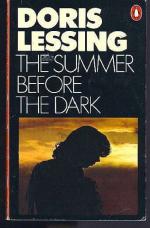
The Summer Before the Dark is Doris Lessing's most misunderstood novel. If taken at face value, the novel lacks depth and substance. This has led some critics to term the book a fable, or an allegory for our time…. Many of the problems disappear when the critic realizes that Lessing is extending the mode she used so successfully in portions of her earlier novels, that of satire. A comparison of the tone, the images, and the terms of Kate's self-discovery with those of Lessing's earlier novels and protagonists makes her satiric intention quite obvious.
The story of Kate Brown and the description of her middleage crisis lacks by comparison with Lessing's earlier narratives on a similar theme, the introspective depth, the archetypal power, or thematic impact of her previous works. Instead of describing the process of individuation, a journey within and resultant growth, as she had in the...
|
This section contains 2,766 words (approx. 10 pages at 300 words per page) |
|



