
 Print
Print Word
Word PDF
PDF|
This section contains 631 words (approx. 3 pages at 300 words per page) |

|
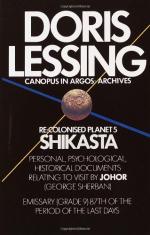
Doris Lessing [in Shikasta] retells the story of the Bible, incorporating along the way elements from other Middle East religious traditions. The specifically modern part, and the nearest in feel to science fiction, is the description of the end of our civilization—which is indeed central. And I think it is more than mere coincidence that it is from British writers these days that we get these fantasies about history and how different it might have been—from Kingsley Amis and William Golding—and something equivalent from British critics. The main fact in modern English consciousness, though it surfaces obliquely and intermittently, is the end of the empire, and it is easy to take the imaginative step which translates that into 'the end of the world.' (p. 22)
I don't mean to suggest that it is intellectually slack or imaginatively dull, for in fact I found it moving...
|
This section contains 631 words (approx. 3 pages at 300 words per page) |
|



