
 Print
Print Word
Word PDF
PDF|
This section contains 197 words (approx. 1 page at 300 words per page) |

|
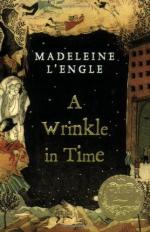
A Wrinkle in Time [is] a fantasy which uses many of the devices of science fiction, but which does not rely on its machinery to produce story. Space and time fantasy can have fully developed character, and yet retain the ingenuity we find in science fiction. Even though the characters of A Wrinkle in Time have special mental powers, they do not lose their humanness. Father, the brilliant scientist, through sheer human weariness has lost his fight with IT, the huge, disembodied brain. Meg struggles to hold back Charles Wallace, who—arrogantly believing in the superiority of mind—is drawn into IT's control. Meg's human stubbornness helps her rescue her father, but in the process she leaves Charles Wallace. Sustained by the strength of an indomitable human force, love, Meg returns to rescue her brother and reunite the family. These are round, three-dimensional characters; they can be found...
|
This section contains 197 words (approx. 1 page at 300 words per page) |
|



