
 Print
Print Word
Word PDF
PDF|
This section contains 234 words (approx. 1 page at 300 words per page) |

|
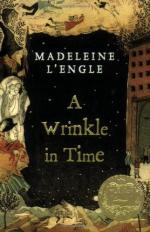
Madeleine L'Engle's A Wrinkle in Time is a splendid fantasy; … it seldom violates reality. The Murry family relationships, Calvin's relationship to his parents, and Meg's relation to school authorities and the community, as well as the character portraits, are probable and realistic. Envy of the Murrys, gossip about the supposedly runaway father-husband, malice, selfishness, and even Charles Wallace's arrogance, are unflinchingly presented. Tesseracting, a seemingly instantaneous movement in time and/or place, is given a metamorphic fifth-dimension explanation. The witches who were formerly stars dying in the struggle against the evil shadow fight a symbolic battle steeped in classical and Gospel-of-John traditions, a battle that is psychically realistic even though symbolic. One can even relate Mrs. Whatsit's, Mrs. Who's, and Mrs. Which's actions to current theories of black holes in space and neutron stars; even the life style on Camazotz has an affinity to entropy. The only weakness...
|
This section contains 234 words (approx. 1 page at 300 words per page) |
|



